You should replace your e-bike brake pads when the friction material drops below 1-2 mm or if you hear a metallic squeal while braking. A spongy brake lever or reduced braking power also indicates worn pads. Check for uneven wear patterns; these can signify misalignment. Always replace pads in pairs to ensure balanced braking and compatibility with your brake system. For more information on inspecting and selecting the right pads, continue reading to enhance your e-bike maintenance skills.
Key Takeaways
- Replace e-bike brake pads when the friction material is worn down to 1-2 mm thick.
- Listen for metallic squealing during braking; this indicates that replacement is necessary.
- A spongy brake lever or reduced braking power suggests worn brake pads.
- Inspect for uneven wear patterns, which may indicate misalignment in the brake system.
- Regularly monitor e-bike brake performance to ensure timely replacement and safety.
Identifying Signs of Worn E-Bike Brake Pads
When maintaining your e-bike, monitoring the condition of your brake pads is crucial for safety and performance.
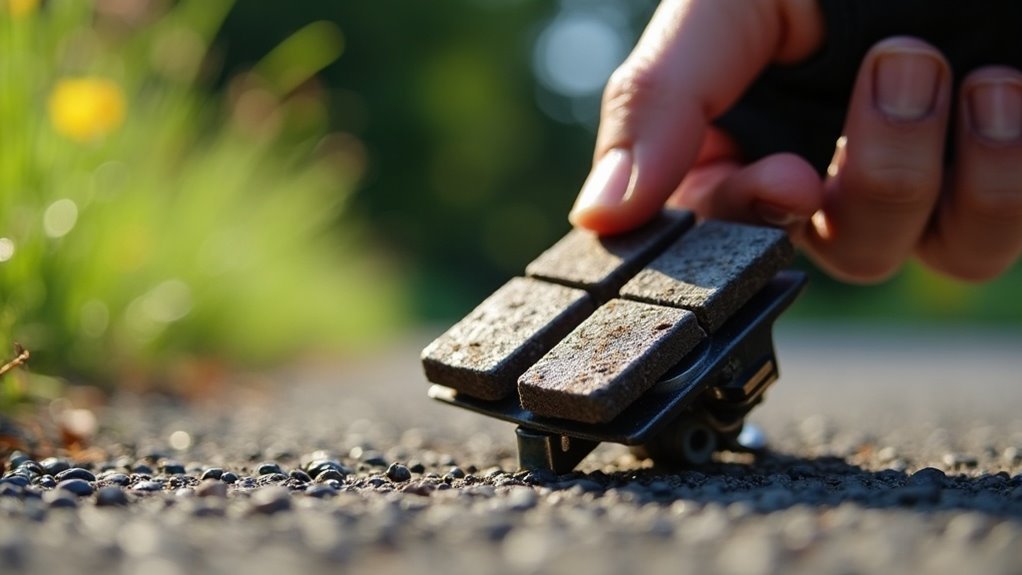
Regularly check your brake pads for wear indicators and replace them when the friction material is less than 1-2 mm thick.
Listen for a metallic squeal—this often signals that replacement is necessary.
A metallic squeal from your brakes is a key indicator that it’s time for a replacement.
If you notice a spongy brake lever or experience reduced braking power, your pads may be worn and ineffective.
Additionally, watch for uneven wear patterns, which can suggest misalignment in your brake system.
Adhering to the manufacturer’s recommendations will ensure optimal braking performance and safety during your rides. Choosing the right brake pads for your e-bike can also enhance your overall riding experience.
How to Inspect and Replace E-Bike Brake Pads?
Regular inspections of your e-bike’s brake pads are essential for ensuring a safe and efficient ride. To maintain optimal braking performance, follow these steps:
- Inspect the brake pads by removing the wheel; look for wear indicators and ensure they’ve a thickness of 1-2 mm.
- Listen for metallic squealing noises during braking; this often indicates that it’s time to replace the brake pads.
- Evaluate the brake lever feel; a spongy lever or diminished braking power suggests worn pads.
- Clean your brake components with isopropyl alcohol before installing new pads, and perform a bedding-in procedure to achieve peak performance. Additionally, consider the importance of regular maintenance to prolong the lifespan of your e-bike’s braking system.
Choosing the Right Brake Pads for Your E-Bike
Selecting the appropriate brake pads for your e-bike is crucial for ensuring safety and optimal performance. Begin by confirming compatibility with your brake system—either hydraulic or mechanical. Determine your caliper type; e-bikes typically utilize two-piston or four-piston calipers. Pay attention to the material types: metallic pads perform well in wet conditions, while organic pads provide reliable stopping power. Always adhere to manufacturer recommendations to enhance performance. Importantly, replace brake pads in pairs to ensure balanced braking and avoid uneven wear. Additionally, consider regenerative braking systems as they can influence the type of brake pads you choose.
| Feature | Details |
|---|---|
| Brake System | Hydraulic / Mechanical |
| Caliper Type | 2-Piston / 4-Piston |
| Material Types | Metallic / Organic |
| Replacement Method | Always in Pairs |