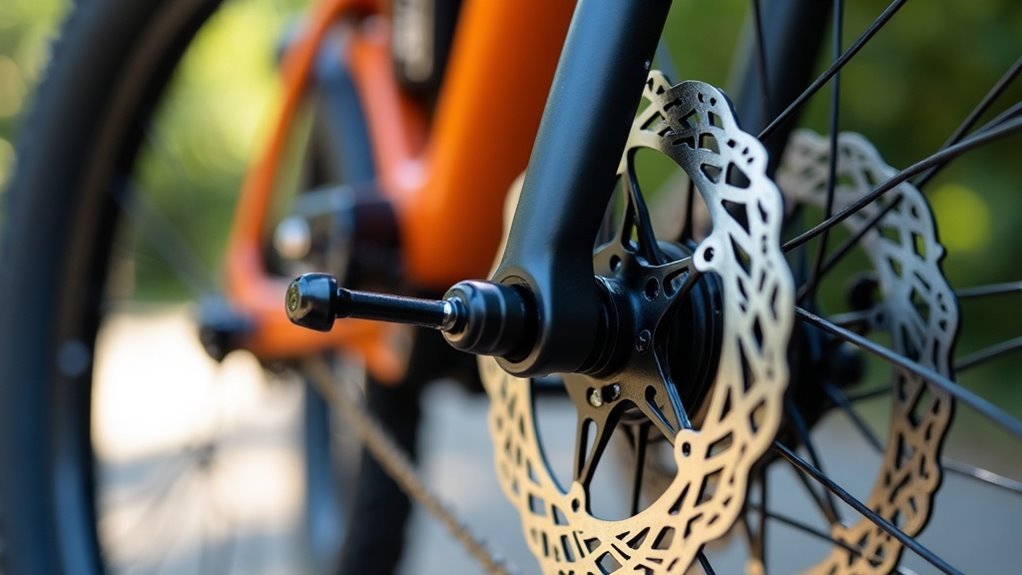
When choosing between disc and rim brakes for your e-bike, disc brakes provide superior stopping power, especially in wet conditions. They deliver consistent performance and have a longer lifespan, ultimately reducing long-term costs. Although they are heavier and more complex to service, the enhanced control and safety they offer are invaluable, particularly for aggressive riding styles. In contrast, rim brakes are lighter and simpler to maintain, but may struggle under varied weather conditions. Consider how these features can influence your e-bike riding experience.
Key Takeaways
- Disc brakes provide 20-30% more stopping power than rim brakes, significantly enhancing safety and performance on e-bikes.
- In wet conditions, disc brakes deliver consistent performance, while rim brakes may struggle with stopping efficiency.
- Hydraulic disc brakes incur lower long-term maintenance costs due to less wear on wheel rims and longer-lasting brake pads.
- Mechanical disc brakes are easier to adjust on the go, whereas hydraulic systems often require specialized knowledge for repairs.
- While rim brakes have a lower initial cost, hydraulic disc brakes can be more cost-effective for frequent e-bike riders over time.
Understanding the Differences Between Disc and Rim Brakes
When choosing between disc and rim brakes for your e-bike, it’s crucial to understand their key differences.
Disc brakes provide superior stopping power and modulation, which is essential given the higher speeds and weight of e-bikes. They perform well in various weather conditions and are less impacted by debris, ensuring consistent braking force.
Disc brakes offer unmatched stopping power and reliability, crucial for the speed and weight of e-bikes in all weather conditions.
On the other hand, rim brakes are lighter and easier to maintain but tend to struggle with stopping power, especially in wet conditions. They also wear down faster due to friction, necessitating more frequent maintenance.
While budget e-bikes may come equipped with rim brakes, most high-end models utilize hydraulic disc brakes for improved safety and performance, making them the favored option. Additionally, the best bottom brackets can enhance overall bike performance, complementing the braking system you choose.
Why Disc Brakes Are Superior for E-Bikes
While exploring brake systems for your e-bike, disc brakes emerge as the clear frontrunner. They offer 20-30% greater stopping power, which is crucial given the weight and speed of e-bikes. In wet conditions, disc brakes ensure reliable performance, significantly enhancing rider safety. Unlike rim brakes, they don’t cause wear on your wheel rims, leading to lower maintenance costs. Additionally, the hydraulic modulation in disc brakes provides precise control, making them ideal for aggressive riding. Choosing the right spine protector can also enhance your overall riding safety.
| Feature | Disc Brakes |
|---|---|
| Stopping Power | 20-30% more |
| Performance in Wet | Consistent |
| Wheel Integrity | No wear |
| Modulation | Precise control |
Stopping Power: Disc Brakes vs. Rim Brakes – What You Need to Know?
Understanding the differences in stopping power between disc brakes and rim brakes is essential for e-bike riders. Disc brakes generate 20-30% more stopping force, which is crucial for heavier e-bikes.
Disc brakes offer 20-30% more stopping power, making them vital for the safety of heavier e-bikes.
In wet conditions, they outperform rim brakes, ensuring consistent performance and shorter stopping distances. This allows you to brake later and corner faster, enhancing safety and handling.
While mechanical disc brakes offer decent performance, hydraulic disc brakes provide superior modulation and control, making them ideal for aggressive riding. Additionally, choosing the right brake pads can significantly impact your overall braking experience.
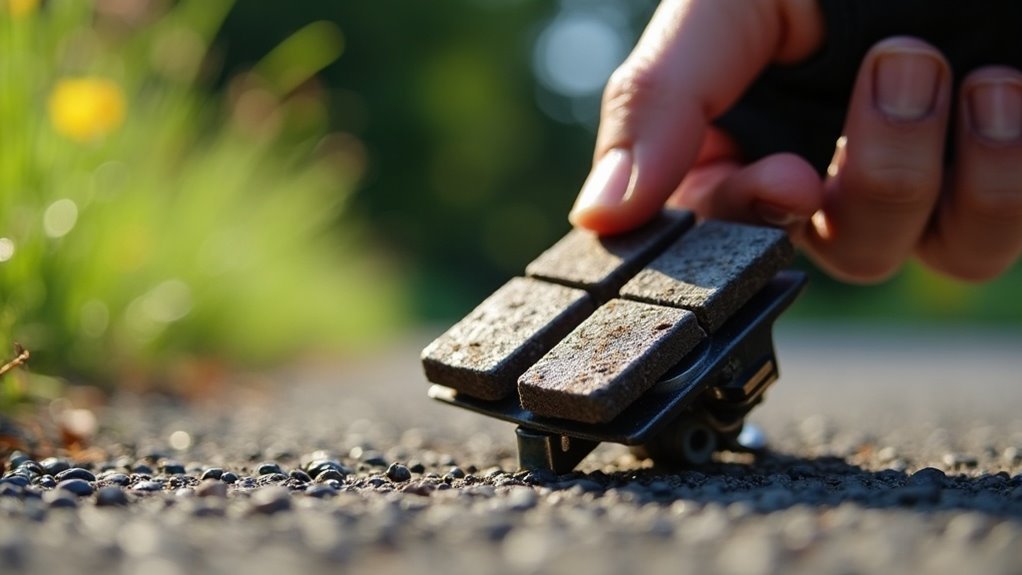
Furthermore, rim brakes tend to wear out faster due to friction against the braking surface, whereas disc brake pads last longer, reducing the frequency of replacements.
Brake Maintenance: Key Longevity Factors
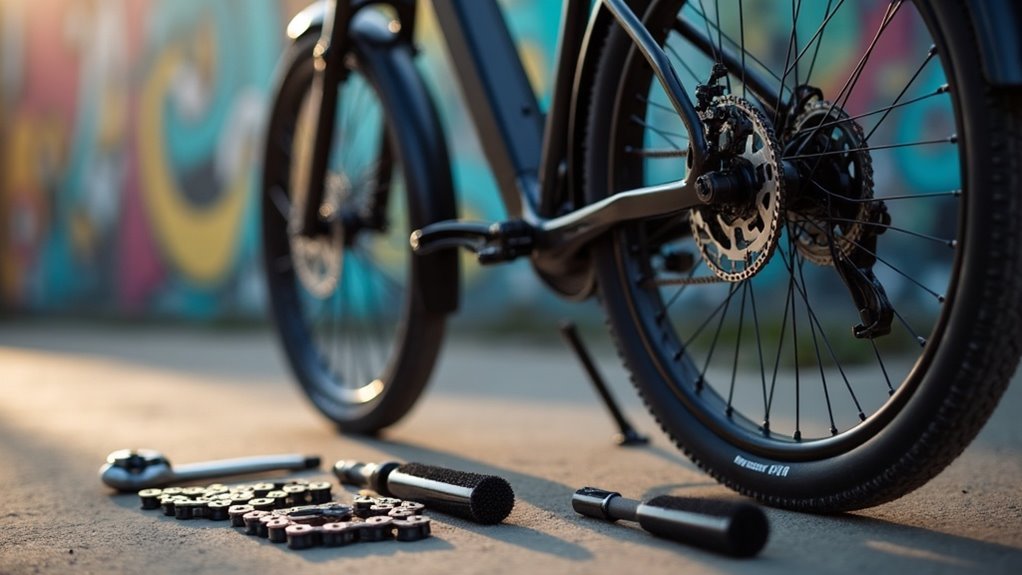
To ensure your e-bike’s brakes last, regular inspections are crucial. Frequently check the pad thickness for rim brakes, while disc brakes benefit from consistent cleaning to prevent debris buildup. Additionally, choosing the right brake levers can significantly enhance your braking performance and safety.
Regular Inspection Frequency
Regular inspections of your e-bike’s brake system are essential for ensuring safety and optimal performance.
Check the disc brake pads and rotors every 1-2 months, especially if you ride frequently.
For mechanical disc brakes, inspect cable tension and pad alignment every 6-12 months to prevent performance issues.
Hydraulic disc brakes should undergo an annual inspection, which includes checking fluid levels and bleeding to maintain ideal braking power.
Keep in mind that brake pads generally need replacement every 6 months to 1 year.
Environmental factors like moisture and grit can shorten brake lifespan, so regular inspections are particularly important in harsher conditions to ensure longevity. Additionally, using a quality bleed kit can significantly enhance the maintenance process for hydraulic brakes.
Proper Cleaning Techniques
Proper Cleaning Techniques for E-Bikes
Inspecting your e-bike’s brake system not only helps identify issues but also lays the groundwork for effective cleaning techniques.
For disc brakes, regularly clean rotors with isopropyl alcohol to remove contaminants, ensuring optimal braking performance while prolonging brake pad life.
When it comes to rim brakes, use a soft cloth and mild detergent to clean the rims, avoiding harsh chemicals that can damage brake pads.
Always check brake pads for wear and debris; replacing them when they become thin protects your rotors.
Lastly, keep oil away from brake components, as it reduces friction and compromises safety.
Regular maintenance is crucial for a safe riding experience.
Cost Comparison: Upfront vs. Long-Term Expenses
While upfront costs for rim brakes tend to be lower, it’s essential to evaluate the long-term expenses associated with rim and hydraulic disc brakes on e-bikes.
Hydraulic disc brakes, ranging from $60 to $250 per wheel, incur annual maintenance costs of $40-80 due to bleeding and pad replacements.
In contrast, rim brakes cost $30-50 annually but may require additional adjustments, adding $10-20 every 6-12 months.
Although hydraulic systems demand a higher initial investment, their superior braking power and reduced maintenance frequency can lead to cost savings for frequent e-bike riders, making the long-term expenses more comparable.
Choosing Disc Brakes or Rim Brakes for Your Riding Style
When choosing between disc and rim brakes for your e-bike, it’s essential to consider how your riding style impacts your decision.
If you’re an aggressive rider or a regular commuter, hydraulic disc brakes provide superior stopping power and durability, particularly in diverse weather conditions and under heavier loads. They offer consistent performance and reduce hand fatigue during long rides.
On the other hand, if you prioritize a lighter bike and simpler maintenance, rim brakes may be more suitable, though they tend to wear out faster and can struggle with heavier loads.
Ultimately, your riding style will determine which brake type aligns best with your performance and durability needs.
Should You Upgrade to Disc Brakes?
If you’re considering an upgrade to disc brakes for your e-bike, it’s essential to evaluate the significant performance enhancements they provide, particularly in terms of stopping power and modulation.
Keep in mind the added weight of your e-bike; heavier models can benefit more from the improved braking efficiency.
Additionally, consider the long-term maintenance advantages, as disc brakes generally require less frequent servicing and don’t wear down your wheel rims.
Performance Improvements Offered
Performance Improvements Offered for E-Bikes
Upgrading to disc brakes can significantly boost your e-bike’s performance, particularly for heavier models. Here’s how:
- Enhanced Stopping Power: Disc brakes provide up to 30% more braking force, crucial for heavy e-bikes.
- Reliable Performance in Wet Conditions: They minimize stopping distances, enhancing safety during rainy rides.
- Accurate Modulation: This feature offers better control, making it ideal for aggressive riding and challenging terrains.
- Reduced Maintenance Costs: Disc brakes protect wheel rims, prolonging the lifespan of your carbon rims.
With these benefits, you’ll experience improved handling, allowing for later braking and more effective cornering.
Weight Considerations in Upgrades
Weight Considerations in Upgrades for E-Bikes
Considering the weight implications of upgrading to disc brakes is crucial for your e-bike’s overall performance.
While disc brake systems typically weigh more due to added components like calipers and rotors, the enhanced stopping power often outweighs these weight concerns.
For heavier e-bikes, disc brakes provide superior modulation and safety, especially on steep descents or in wet conditions.
Although rim brake systems are lighter, they may compromise braking performance.
Ultimately, you should evaluate the benefits of improved braking capabilities against the minimal increase in weight when deciding whether to upgrade your brake system.
Maintenance and Serviceability Factors
Maintenance and serviceability are crucial factors to consider when upgrading to disc brakes on your e-bike. Here are some key points to keep in mind:
- Maintenance Frequency: Hydraulic brakes require annual bleeding and fluid replacement, while mechanical systems mainly need pad replacements.
- Serviceability: Mechanical disc brakes are simpler to adjust on the road compared to the more complex hydraulic systems.
- Cost: Annual maintenance for hydraulic brakes typically ranges from $40-80, whereas mechanical brakes usually cost between $30-50.
- Brake Pads: Hydraulic systems help prevent rim wear, thereby extending the lifespan of your e-bike’s wheels.
Assess your riding style to find the most suitable option for your needs.