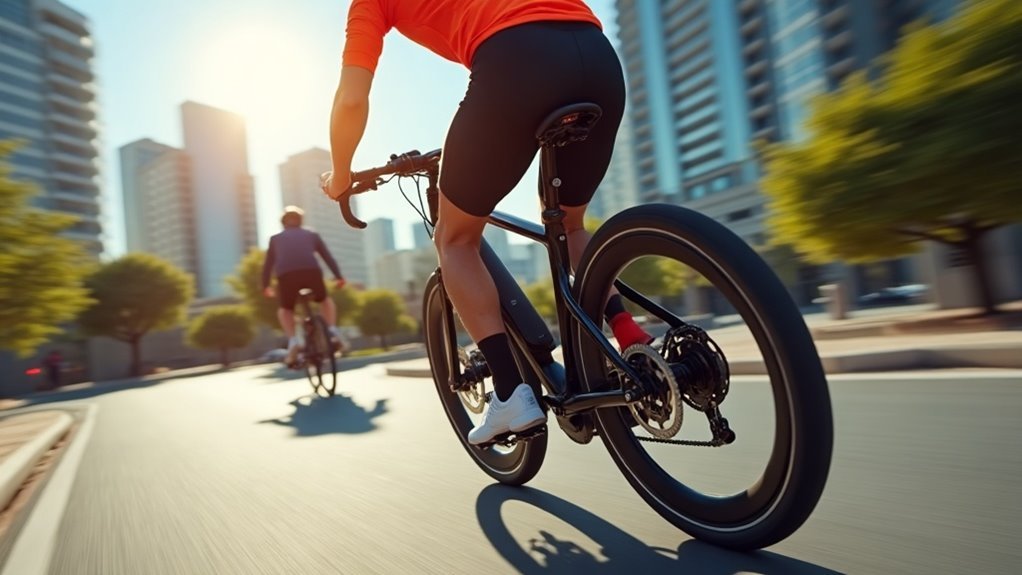
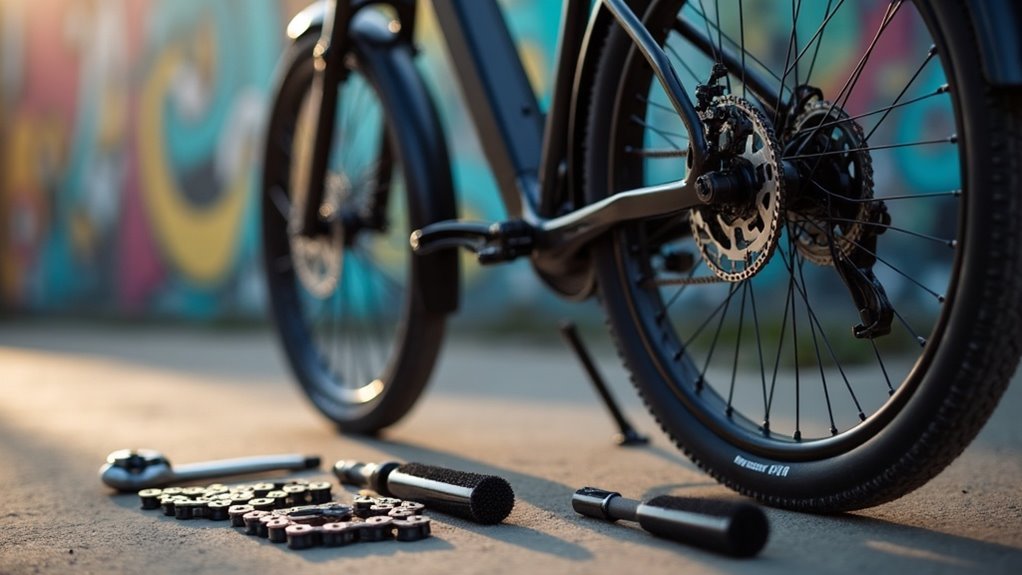
E-bike chain maintenance is crucial because e-bike chains experience significantly higher torque and stress than standard bike chains. With torque levels reaching 60–120 Nm, e-bike chains tend to wear out more quickly, necessitating more frequent upkeep. It’s recommended to clean and lubricate your chain every 100-200 miles and check for elongation using a wear indicator tool. If you notice any unusual noises or shifting difficulties, it’s essential to evaluate your chain’s condition. Learn more about effective maintenance techniques and the signs that indicate when a replacement is needed.
Key Takeaways
Why Chain Maintenance Differs on E-Bikes
- E-bike chains experience higher torque levels, resulting in accelerated wear compared to standard bike chains.
- These chains are made from specialized materials and feature thicker plates for enhanced durability, but they require more frequent maintenance.
- The continuous forces generated by mid-drive motors lead to faster chain degradation, making regular inspections essential.
- E-bike chains typically have a shorter lifespan, ranging from 1,000 to 3,000 miles, which necessitates timely replacements.
- Proper lubrication and cleaning are crucial for e-bike maintenance, with specific intervals differing from traditional bike care.
What Sets E-Bike Chains Apart From Standard Chains?
When comparing e-bike chains to standard chains, you’ll notice key differences that address the specific demands of electric biking.
E-bike chains are designed to handle higher torque, supporting 60–120 Nm, in contrast to the 20–40 Nm of standard chains. With thicker plates for enhanced structural strength, e-bike chains typically measure 1.8–2.2 mm in thickness, compared to 1.6–1.8 mm for standard options.
Constructed from specialized materials, e-bike chains feature reinforced rivet heads and pin interfaces, enabling them to endure continuous high-torque delivery. This robust design focuses on durability and longevity, which is crucial for managing the stress from powerful mid-drive motors while reducing maintenance needs relative to conventional chains. Additionally, high-torque delivery is essential for ensuring optimal performance in e-bike systems.
Why Do E-Bikes Wear Chains Faster?
E-bike chains wear faster primarily due to the high torque exerted on the drivetrain, which increases stress and accelerates wear. Unlike traditional bikes, e-bike chains face continuous forces, leading to a lifespan of only 1,000 to 3,000 miles.
E-bike chains are designed to handle torque levels of 60–120 Nm, significantly higher than the 20–40 Nm typical for standard chains. Mid-drive motors further amplify this effect by transmitting both human and motor power directly through the drivetrain, increasing chain degradation.
Regular maintenance and proper lubrication are crucial to reduce wear and extend the chain’s lifespan, especially for high-power or off-road e-bikes. Additionally, understanding the best bottom brackets can help enhance overall drivetrain performance and longevity.
Key Differences Between E-Bike and Traditional Bike Chains
While traditional bike chains may be adequate for casual riding, e-bike chains are specifically designed to withstand the higher torque and stress produced by electric motors. These chains are characterized by increased tensile strength and thicker plates, focusing on durability rather than weight. Due to the greater demands placed on them, they experience accelerated wear and require more frequent maintenance and timely replacement to avoid drivetrain damage. Choosing the best dry-conditions chain lubricants can also enhance the longevity of e-bike chains.
| Feature | E-Bike Chains |
|---|---|
| Torque Capacity | 60–120 Nm |
| Plate Thickness | 1.8–2.2 mm |
| Wear Rate | 30–70% faster |
| Replacement Threshold | 0.5% elongation |
How to Maintain Your E-Bike Chain Effectively
Maintaining your e-bike chain is crucial for ensuring longevity and optimal performance, especially since e-bike chains experience increased wear compared to traditional bike chains.
Follow these steps for effective maintenance:
- Clean and lubricate the chain every 100-200 miles, using e-bike specific chain lubricants that are suitable for your riding conditions.
- Conduct a deep cleaning after every 10 rides, particularly in wet or muddy environments, to prevent dirt buildup.
- Regularly check the chain’s condition with a chain wear indicator tool; replace it if elongation reaches 0.75% to avoid potential drivetrain damage.
- Consider investing in a drivetrain cleaning kit that is specifically designed for e-bikes to enhance the cleaning process and ensure all components are adequately maintained.
How to Know When It’s Time to Replace Your E-Bike Chain?
When should you consider replacing your e-bike chain? Regular inspection is essential for optimal performance.
Measure chain wear; if you notice a 0.75% elongation, it’s time to replace your e-bike chain to prevent drivetrain damage.
Listen for unusual noises like grinding or gear skipping during rides, as these are clear signs of wear. Use a chain wear indicator tool for an accurate assessment; significant wear indicates that replacement is necessary.
Additionally, monitor your e-bike’s performance—frequent shifting difficulties suggest the chain is nearing its end. Choosing the perfect chain tensioner can also help maintain optimal chain performance.
While proper lubrication and consistent maintenance can extend its life, knowing when to act is crucial for ensuring peak performance.