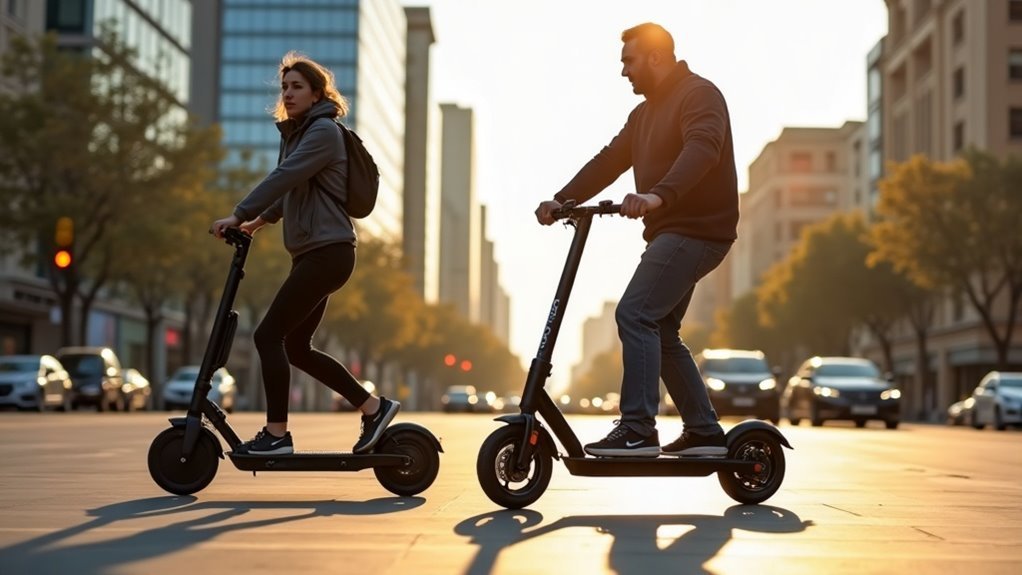
Rider weight significantly impacts e-scooter performance by influencing acceleration, top speed, and battery efficiency. Heavier riders require more force to accelerate, which can slow their start. Exceeding weight limits may reduce speeds by 5-10 km/h and lead to increased energy consumption, draining the battery more quickly. Overloading can also diminish braking efficiency, compromising safety. Understanding these factors is crucial for optimizing your e-scooter experience. Continue reading to discover tips and solutions tailored to enhance your ride.
Key Takeaways
Why Rider Weight Impacts E-Scooter Performance
- Heavier riders require more force to accelerate, leading to slower acceleration and lower top speeds.
- Exceeding weight limits can negatively affect battery efficiency, resulting in decreased range and faster battery depletion.
- Increased rider weight necessitates more energy for maintaining speed, potentially causing a 10-15% decrease in range for every additional 10 kg.
- Overloading the e-scooter poses risks of mechanical damage and reduces braking efficiency, which can extend stopping distances and compromise safety.
- For heavier riders, a more powerful motor (1500W+) is advisable to improve performance, particularly on inclines.
How Rider Weight Affects E-Scooter Speed and Acceleration
When you ride an e-scooter, your weight significantly impacts its speed and acceleration. Heavier riders need more force to accelerate, which can result in slower acceleration times due to the equation (F = ma).
Exceeding the weight limit can reduce top speeds by 5-10 km/h, and on inclines, heavier riders may find it challenging to maintain speed. This added weight also leads to increased energy consumption, draining the battery more quickly and reducing overall range, especially during acceleration.
To achieve optimal performance, heavier riders should consider e-scooters with higher motor power (1500W or more) to effectively compensate for their weight and improve speed and acceleration. Additionally, selecting an e-scooter with a suitable battery capacity can help ensure that performance remains consistent even under heavier loads.
The Impact of Load Capacity on E-Scooter Performance
Rider weight isn’t the only factor influencing e-scooter performance; load capacity plays a critical role as well. Exceeding the manufacturer-recommended weight limit significantly affects performance, resulting in sluggish acceleration and reduced top speed due to increased demands on the motor.
For heavier riders, battery efficiency declines, leading to a shorter range and more frequent recharges. Additionally, using e-scooters beyond their load capacity raises safety risks, as it can accelerate wear on frames and components, increasing the likelihood of mechanical failures.
Understanding load capacity is essential for ensuring durability, safety, and an overall positive riding experience, enhancing your enjoyment and performance on the road. Choosing the right rear hub motor kit can also help optimize performance based on rider weight.
Understanding How Weight Affects Battery Efficiency and Range
Weight significantly affects battery efficiency and range in e-scooters, as increased mass requires more energy for acceleration and maintaining speed. Understanding this can help you optimize your rides:
Weight plays a crucial role in e-scooter battery efficiency, impacting acceleration and speed maintenance. Optimize your rides by understanding this relationship.
- Heavier riders lead to higher energy consumption, substantially reducing the scooter’s range.
- For every additional 10 kg (about 22 lbs), anticipate a 10-15% decrease in range.
- Larger batteries (measured in watt-hours, Wh) are recommended for heavier riders.
- Riding on smooth surfaces enhances battery efficiency compared to uneven terrains.
- Maintaining a steady speed is crucial to minimize battery drain and maximize overall efficiency.
- Selecting the perfect battery can further improve performance for riders of all weights.
Why Load Capacity Matters for Your E-Scooter’s Durability
Understanding the impact of load capacity on your e-scooter’s durability is crucial for ensuring its longevity and performance. Exceeding weight limits can compromise the frame and suspension, leading to mechanical failures and reduced lifespan.
Heavy loads also place additional stress on the motor, increasing the risk of overheating and other complications. Adhering to the recommended load capacity not only enhances braking efficiency but also ensures safer rides with shorter stopping distances. Choosing a scooter that aligns with your weight requirements—particularly heavy-duty models—can improve overall performance and reduce the need for maintenance. Additionally, selecting a scooter with higher load capacity allows for a better riding experience and can accommodate varying rider weights. By respecting these guidelines, you’ll enjoy a more reliable and long-lasting e-scooter that effectively meets your riding needs.
What Are the Safety Risks of Overloading Your E-Scooter?
Overloading your e-scooter can lead to significant mechanical damage, particularly to the frame and suspension, which compromises its structural integrity. This added weight also reduces braking efficiency, making it increasingly difficult to stop quickly in emergencies. Understanding these risks is essential for maintaining both your safety and the performance of your e-scooter. Additionally, using high-quality brake pads can further enhance your e-scooter’s stopping power, ensuring safer rides.
Mechanical Damage Risks
Exceeding the manufacturer-recommended weight limit can lead to significant mechanical risks for your e-scooter. Overloading not only impacts performance but also compromises safety.
Here are key concerns to consider:
- Structural integrity: Risk of stress fractures or bends in the frame.
- Motor strain: Increased likelihood of overheating and permanent damage.
- Performance issues: Diminished speed and responsiveness.
- Braking distance: Longer stopping times increase the chance of accidents.
- Component fatigue: Parts like brakes and suspension experience accelerated wear under excessive weight.
Recognizing these risks is crucial for ensuring your e-scooter’s safety and longevity.
Reduced Braking Efficiency
When you overload your e-scooter, it significantly impacts braking efficiency, resulting in longer stopping distances. Extra weight requires more force to decelerate, putting strain on the braking system.
This diminished braking performance not only leads to increased wear on brake components but can also cause overheating and potential failure if you consistently exceed manufacturer specifications.
Furthermore, the risk of tire blowouts escalates with excessive weight, jeopardizing overall safety.
Adhering to weight limits is crucial for maintaining optimal braking performance, ensuring safe navigation across various terrains.
Prioritizing these specifications protects both you and your e-scooter.
Tips for Heavier Riders to Optimize E-Scooter Performance
To optimize e-scooter performance as a heavier rider, it’s crucial to choose a model with at least 500W of motor power for improved acceleration and speed.
Regular maintenance, including checking tire pressure and ensuring brake functionality, is vital for safety and efficiency.
Motor Power Selection
Selecting the right motor power is essential for heavier riders seeking ideal e-scooter performance. Here are key considerations:
- Opt for at least 500W to ensure sufficient acceleration and top speed.
- If you weigh over 100 kg, choose motors with 1500W or more for optimal handling.
- Prioritize high torque to maintain speed and effectively tackle inclines.
- Confirm robust battery capacity (measured in Wh) for extended ranges and greater energy demands.
- Regularly assess motor performance and battery health to maximize efficiency.
Maintenance Practices
Maintaining your e-scooter is crucial for optimizing its performance, especially for heavier riders.
Regularly check tire pressure; proper inflation reduces rolling resistance, enhancing efficiency under your weight. Inspect the motor and battery routinely to prevent overheating, which is essential for handling heavier loads.
Clean and lubricate the brakes and bearings to ensure effective stopping power, as you may need shorter stopping distances. Avoid sudden accelerations; maintaining a steady speed optimizes battery efficiency and prevents quicker energy drain.
If you weigh over 100 kg, consider upgrading to a higher wattage motor (1500W+) for improved power and a smoother ride, enhancing overall performance.
How to Choose the Right E-Scooter for Your Weight
How can you guarantee your e-scooter meets your weight requirements? Start by considering the maximum load capacity and matching it with your weight.
Here are key factors to evaluate:
Consider essential factors like weight limits, motor power, and frame reinforcement to ensure your e-scooter suits your needs.
- Check the manufacturer’s specifications for weight limits specific to e-scooters.
- Look for a powerful motor (at least 500W) if you weigh over 120 kg for optimal performance.
- Assess battery life to ensure it can support your weight effectively.
- Choose lightweight models for riders under 100 kg for enhanced maneuverability.
- Opt for heavy-duty e-scooters with reinforced frames to accommodate heavier riders safely.