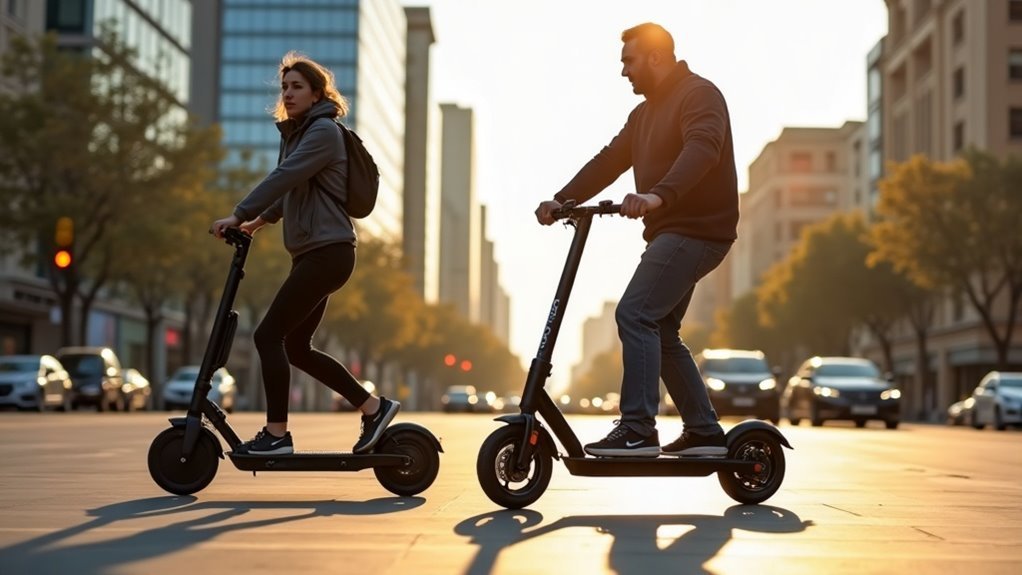

When it comes to wet conditions, disc brakes on e-bikes definitely outperform rim brakes. Their design effectively minimizes moisture impact, ensuring consistent stopping power. The materials used, like metallic and ceramic, resist water absorption and dissipate heat efficiently, preventing brake fade. In contrast, rim brakes struggle as rubber pads harden, and water creates films that delay response time. For peak performance and safety, understanding maintenance practices specific to e-bike braking systems is essential. Discover more about enhancing your e-bike braking efficiency and safety.
Key Takeaways
- Disc brakes provide reliable stopping power in wet conditions for e-bikes due to their design, which minimizes moisture impact.
- Rim brakes struggle in rain as rubber pads harden, reducing grip and delaying response time, making them less effective for e-bikes in wet environments.
- The rotor placement of disc brakes effectively reduces water and debris interference, ensuring consistent performance for e-bikes.
- Materials used in disc brakes, such as metallic and ceramic, resist water absorption better than those found in rim brakes.
- Regular maintenance of both brake types is essential, but disc brakes generally offer superior performance for e-bikes in wet weather.
Why Disc Brakes Excel in Rainy Weather
When it rains, having a reliable braking system is crucial for e-bikes, and disc brakes truly excel in these conditions. Their design minimizes the impact of moisture, ensuring consistent stopping power.
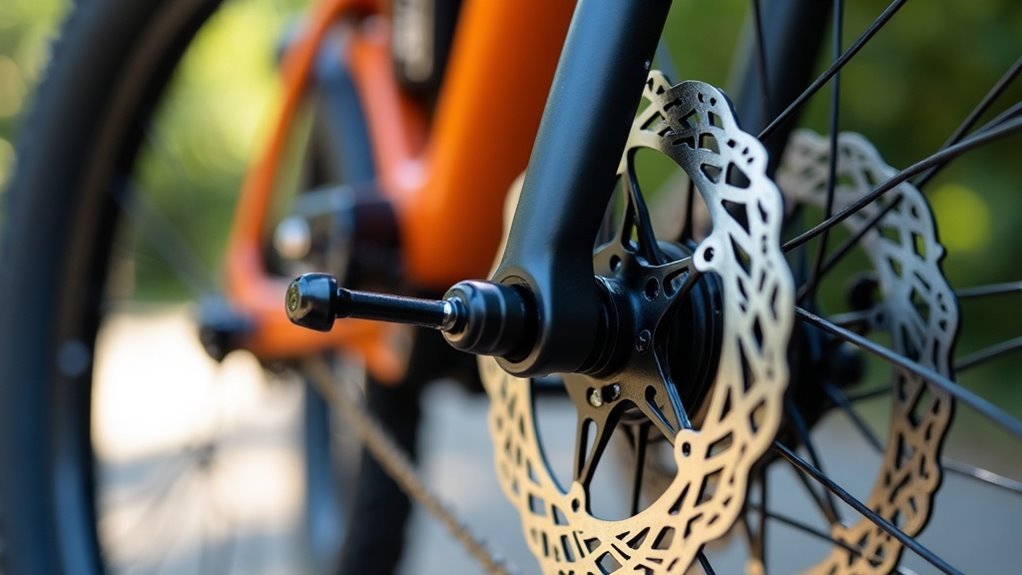
The rotor’s placement effectively reduces water and debris interference, allowing for immediate response. Unlike rim brakes, which can become less effective due to water accumulation, disc brakes grip the rotor directly, maintaining peak performance.
The materials used, such as metallic or ceramic compounds, resist water absorption, enhancing grip in wet weather. Additionally, disc brakes dissipate heat efficiently, preventing brake fade from prolonged use—an essential feature for safety during rainy rides. Choosing the right DOT brake fluid can further enhance the performance and reliability of your braking system.
Rim Brakes: Key Limitations in Wet Conditions
In contrast to the advantages of disc brakes in wet conditions, rim brakes on e-bikes exhibit significant limitations that can compromise safety and performance. The rubber brake pad materials often harden, reducing grip and braking power. Water on the rims creates a film that delays response, leading to longer stopping distances. Additionally, rim brakes struggle with effective water displacement techniques, resulting in inconsistent performance during heavy rain. In snowy conditions, ice buildup further complicates braking. Regular maintenance, such as cleaning rims and checking pad wear, can help mitigate these issues, but these limitations remain crucial considerations for e-bike safety. Choosing the right brake cables can also influence overall braking performance in varying conditions.
| Limitation | Impact | Solution |
|---|---|---|
| Hardening of pads | Reduced grip and braking power | Regular pad replacement |
| Water film | Delayed braking response | Increased braking pressure |
| Inconsistent performance | Longer stopping distances | Improved water displacement |
| Ice buildup | Severe braking effectiveness | Regular checks and cleaning |
How to Maintain Brake Performance in Wet Conditions
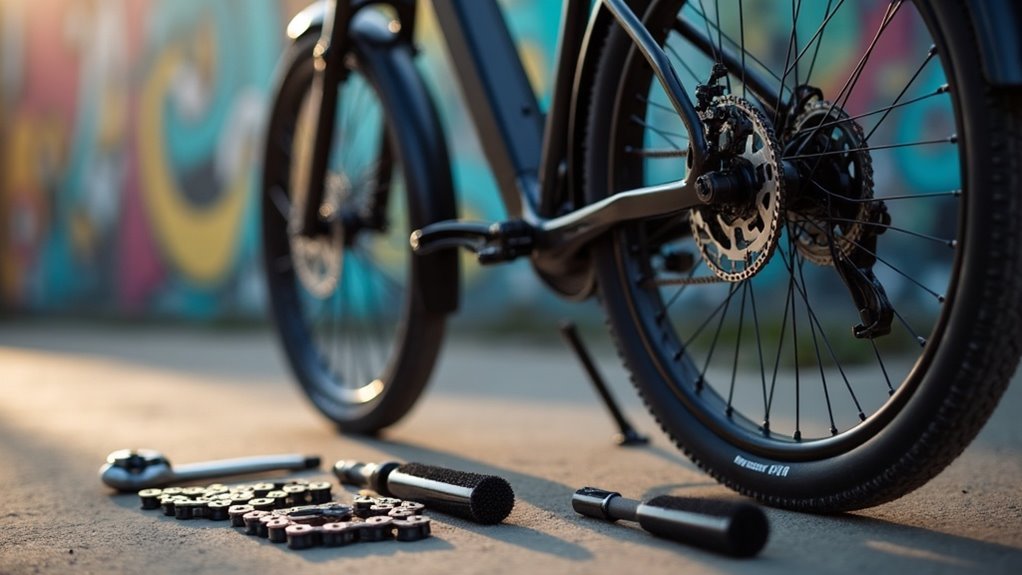
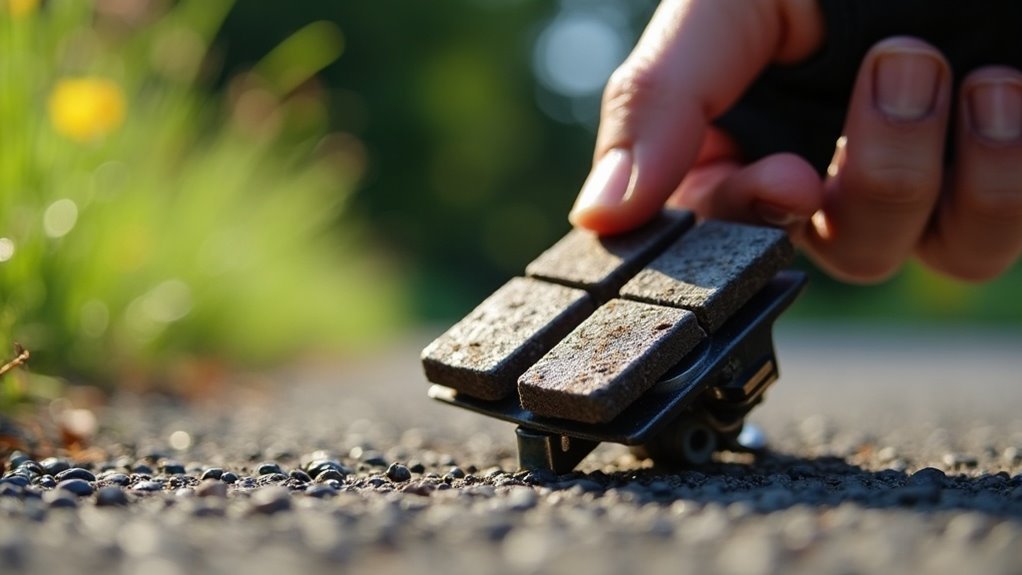
To maintain ideal brake performance in wet conditions for e-bikes, regularly inspecting brake pads for wear is essential, as moisture accelerates their deterioration.
Use water-resistant lubricants and greases on key components for effective moisture protection, ensuring smooth operation.
Frequently clean brake surfaces and components to eliminate debris that can compromise braking efficiency.
Properly adjust and align your brake system, especially after exposure to rain, to maintain top performance.
Additionally, monitor tire pressure and tread depth; proper tire maintenance enhances grip and stability, directly impacting your braking performance on wet roads.
Prioritizing these steps will greatly improve your safety and responsiveness in adverse conditions while riding your e-bike. Moreover, selecting the best resin brake pads can further enhance your braking efficiency in wet conditions.