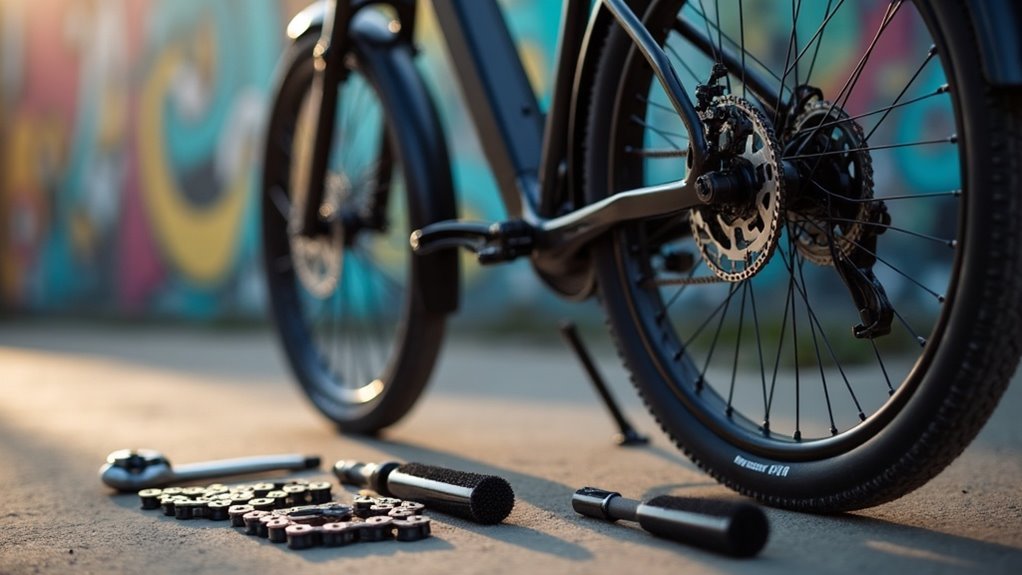
Chain stretch refers to the elongation of your e-bike’s chain over time, typically due to wear on pins and bushings. This elongation can affect performance and may lead to costly repairs if not addressed. To measure it, use tools like the Park Tool CC 3.2, looking for elongation exceeding 0.75 mm. Regular maintenance, including lubrication and cleaning, is essential to prevent further wear. Want to optimize your e-bike’s performance? Discover effective strategies to keep your chain in top shape.
Key Takeaways
What Is Chain Stretch and How to Measure It for E-Bikes
- Chain stretch refers to the elongation of an e-bike chain due to wear, which can significantly impact performance and lead to costly repairs if not addressed promptly.
- Factors contributing to chain elongation include high tension, friction, exposure to dirt, and insufficient maintenance.
- Elongation reduces power transfer efficiency, increases wear on the sprockets, and complicates gear shifting, potentially affecting the overall riding experience.
- To measure chain stretch, use tools like the Park Tool CC 3.2, and consider replacing the chain when elongation exceeds 0.75 mm.
- Regular lubrication, cleaning, and inspections are essential to prevent elongation, thereby enhancing the chain’s lifespan and ensuring optimal performance for your e-bike.
What Is Chain Stretch and Why Does It Matter?
Chain stretch, often misunderstood as simple elongation, actually refers to the elongation of a chain due to wear on its pins and bushings over time.
This wear increases the pitch length, affecting performance and efficiency in e-bikes. When chains elongate by 3% of their original length, they’re considered worn out, which can lead to costly repairs and operational inefficiencies.
Regular monitoring of chain elongation is essential to maintain optimal e-bike performance. Proper maintenance—including lubrication and timely replacement—can significantly extend the lifespan of roller chains, ensuring they operate effectively and reducing the risk of breakdowns. Additionally, choosing the right chain tensioner for your needs can further enhance chain performance and lifespan.
How Chain Elongation Happens?
Chain elongation in e-bikes primarily results from wear on the pins and bushings, which leads to an increased pitch length without actual material stretching.
Factors such as friction and normal wear, including bending pins and widening holes, significantly affect performance. Understanding chain wear indicators is crucial for implementing effective maintenance strategies to preserve the integrity of your e-bike’s chain.
Causes of Chain Wear
As e-bikes operate, the continuous movement of components leads to wear on the chain, primarily through the degradation of pins and bushings. This wear occurs due to friction during articulation, gradually eroding the pins and altering their diameter, which contributes to chain wear.
Over time, chain holes can widen, causing misalignment of the pins and further accelerating wear. It’s essential to regularly monitor the chain condition, as elongation can reach critical levels around 3% of the original length, necessitating replacement. Additionally, using a high-quality chain catcher can help mitigate chain wear by ensuring proper alignment and preventing chain drop.
Identifying and addressing these causes early can prevent premature failure and enhance the reliability of your e-bike.
Effects on Performance
Wear on the chain significantly affects your e-bike’s overall performance. Chain elongation occurs due to friction on pins and bushings, leading to material loss and increased pitch length. When your chain wears by just 3%, you’ll experience decreased efficiency and a heightened risk of failure. Misalignment from bent pins and widened holes complicates the issue further. Additionally, selecting the right bottom bracket type can play a crucial role in maintaining overall drivetrain efficiency.
| Performance Factor | Effect of Elongation |
|---|---|
| Efficiency | Reduced power transfer |
| Risk of Failure | Higher likelihood of breakage |
| Lifespan | Decreased due to wear |
Regular chain maintenance is essential for early detection of elongation, helping maintain optimal e-bike performance.
Prevention Strategies
To prevent chain elongation in electric bicycles (e-bikes), understanding its causes is essential.
Chain stretch primarily results from normal wear on pins and bushings, which increases pitch length. Continuous friction can degrade pin materials, reducing diameter and accelerating elongation. Misalignment of pins, often due to widening chain holes, further compromises integrity.
To combat this, regular lubrication is vital; neglecting it can lead to accelerated wear and costly repairs. Additionally, proactively observing and addressing early signs of wear can prevent significant operational costs associated with chain failure. Furthermore, investing in a quality bike chain can significantly reduce the risk of premature elongation.
Identifying Signs of Chain Stretch
Identifying signs of chain elongation in e-bikes is crucial for maintaining optimal performance.
Look for noticeable gaps between roller links, which indicate wear and potential elongation. If you’re having trouble maintaining proper tension, that’s another sign the chain may be stretching.
Additionally, examine the sprockets for uneven wear patterns; this can signal that the chain is affecting overall functionality.
Examine sprockets for uneven wear patterns; they may indicate that chain issues are impacting overall performance.
Regular checks with tools like the Timken Drives’ EZ Chain Wear Gauge can help catch elongation early.
If your chain measures over 0.75 mm of elongation with a standard checker, it’s time for a replacement to ensure ideal performance.
Tools to Measure Chain Stretch Effectively
Measuring chain stretch accurately is essential for maintaining your e-bike’s performance, and several tools are specifically designed to assist with this task.
The Park Tool CC 3.2 chain checker effectively measures elongation, indicating no stretch below 0.5 mm.
The Park Tool CC 2 features a slidable gauge that requires zeroing before use and should be replaced if measurements exceed 0.75 mm.
KMC’s digital chain checker has a user-friendly design, signaling replacement when elongation surpasses 0.8 mm.
Regularly using these tools to measure chain stretch ensures optimal e-bike performance and prevents premature chain failure, so select one that meets your specific needs.
Measuring Chain Stretch: A Simple How-To
Measuring Chain Stretch on E-Bikes: A Simple How-To
Start by positioning your chain checker at the midpoint of the chain, ensuring the tool’s gauge aligns with the roller links. Follow these steps for effective measuring chain stretch:
- Insert the Gauge: Slide the gauge into the chain until it fits snugly between the roller links.
- Read the Measurement: Check the reading; if it exceeds 0.5 mm, it’s time to consider replacement.
- Assess Condition: If the measurement is over 0.75 mm (Park Tool CC 2) or 0.8 mm (KMC’s digital checker), replacement is necessary.
Regularly measuring chain stretch helps maintain optimal performance and prevents premature failure of your e-bike.
How to Prevent Chain Stretch?
To keep your e-bike chain in top shape and prevent stretch, regular lubrication is essential. Lubrication protects the chain from dirt and moisture, which can accelerate wear and elongation.
Always observe your chain for signs of wear; catching issues early can prevent significant elongation. Maintaining proper tension is vital, as it reduces stress on the pins and bushings, preventing the chain from stretching.
Schedule routine inspections using tools like the Timken Drives’ EZ Chain Wear Gauge to monitor wear.
Finally, keep the chain clean and free from debris to enhance its lifespan and minimize wear effects.
When to Replace Your Chain for Optimal Performance?
Even with proper maintenance, e-bike chains will eventually wear out. To ensure optimal performance, you should replace your chain when:
- It elongates by 3% of its original length, which could jeopardize your system’s reliability.
- A Park Tool CC 2 checker indicates wear exceeding 0.75 mm.
- A KMC digital chain checker signals wear over 0.8 mm.
Regularly measure chain elongation using tools like the Timken Drives’ EZ Chain Wear Gauge.
Neglecting these checks can lead to excessive wear on sprockets and increased maintenance costs.
Stay proactive to maintain peak efficiency and avoid costly repairs in the future.