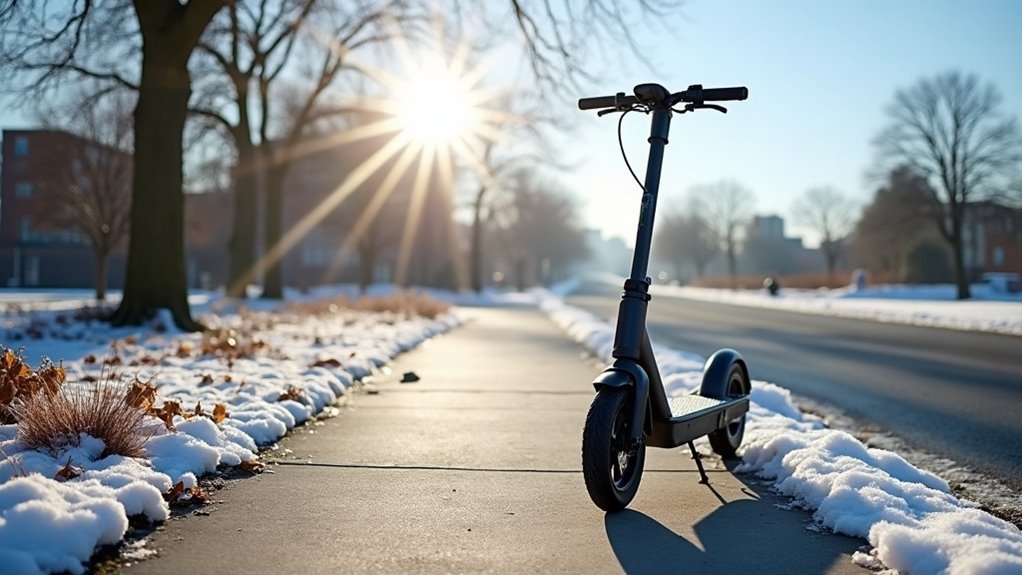
E-scooters experience reduced range in cold weather primarily due to the diminished efficiency of lithium-ion batteries. At temperatures around -10°C, their capacity can decrease by up to 50%. A mere drop of 10°C can lead to a 10-20% reduction in range. The increased internal resistance means less available power, and the charging process slows as the Battery Management System waits for the battery to warm up. Being aware of these factors can enhance your winter riding experience and help maintain battery health.
Key Takeaways
Cold weather can significantly impact the range of e-scooters, with lithium-ion battery capacity dropping by up to 50% at -10°C. A decrease in temperature of just 10°C can lead to a 10-20% reduction in range. The internal resistance of the battery increases in colder conditions, limiting the available power for operation. Additionally, charging times can be extended as the Battery Management System may delay charging until the battery reaches a warmer temperature. Energy consumption can also rise by 20-40% during winter rides due to challenging conditions.
How Cold Weather Impacts E-Scooter Battery Performance
When temperatures drop, e-scooter battery performance declines significantly, impacting your ride.
Cold weather substantially reduces lithium-ion battery efficiency, with capacity potentially dropping by up to 50% at -10°C. A 10°C decrease can result in a 10-20% reduction in range due to slower chemical reactions.
Cold weather can severely impact lithium-ion battery efficiency, with capacity potentially dropping by 50% at -10°C.
You may also experience increased internal resistance, which reduces usable power and prolongs charging times, as the Battery Management System delays charging until the battery warms up.
Be prepared for 20-40% more energy consumption during winter rides, as these factors collectively impair your e-scooter’s performance in challenging weather conditions.
Maximizing Your Scooter’s Range in Cold Weather
To maximize your e-scooter’s range in cold weather, begin with a full charge, as battery efficiency significantly declines in low temperatures.
Try to avoid riding in freezing conditions; every 10°C drop can reduce your range by 10-20%.
Keep your riding speed moderate and avoid hard accelerations or braking to conserve battery power, as aggressive riding can strain performance.
Consider using a heated battery cover to maintain optimal battery function in cold weather.
Regularly check and maintain tire pressure; under-inflated tires increase resistance, negatively affecting your scooter’s efficiency and range.
Implementing these strategies will help you get the most out of your e-scooter. Additionally, choosing the right scooter carry strap can enhance your riding experience by making it easier to transport your scooter when not in use.
Get Your E-Scooter Ready for Winter
As winter approaches, preparing your e-scooter is essential for maintaining optimal performance and safety.
Begin by checking the tire pressure; adjusting the PSI can enhance grip on icy surfaces.
Checking tire pressure is crucial; proper PSI boosts grip on icy surfaces for safer winter rides.
Warm up your e-scooter battery indoors at temperatures between 15–25°C before riding, as cold weather can negatively impact battery life and efficiency.
Ensure your braking system is responsive, as lower temperatures can extend braking distances.
Always store and charge your e-scooter indoors to avoid battery issues associated with extreme cold.
Choosing the right e-scooter battery is crucial for maximizing performance during cold weather.
These preparations will help you maximize your e-scooter’s performance and ensure a safe ride throughout the winter months.
Cold Weather Riding Tips
Preparing your e-scooter for winter is crucial for safe riding, and understanding how to handle cold conditions is equally important.
Cold temperatures can significantly reduce battery range, so it’s best to warm the battery indoors at 15–25°C before use. To enhance battery efficiency, adjust your riding style: avoid hard accelerations that can quickly drain power. Additionally, knowing the best e-bike batteries can help you choose a battery that performs well in cold weather.
Be prepared for increased energy consumption, as winter rides may require 20-40% more power to maintain speed. Consider using a heated battery cover for optimal performance.
Lastly, dress in layers and wear insulated gloves to maintain control and keep warm, ensuring a better riding experience.