An e-bike controller is a vital component that regulates the power flow from the battery to the motor, ensuring optimal performance during your ride. It connects key elements such as the battery, throttle, and sensors, adjusting power output based on your input. This regulation enhances the smoothness and efficiency of your ride while incorporating safety features like speed limits. By understanding its role, you’ll gain insight into how it influences your biking experience and learn more about its various types and functionalities.
Key Takeaways
What Is a Controller on an E-Bike
- An e-bike controller regulates power transfer from the battery to the motor, significantly impacting ride performance and efficiency.
- It connects to essential components like the throttle, battery, and pedal-assist sensors for smooth operation.
- Controllers manage speed, power output, and safety features, including speed limits and emergency stops.
- They come in various types, such as sine wave and square wave, which influence noise levels and the smoothness of the ride.
- Upgrading a controller can improve acceleration, efficiency, and the overall riding experience while resolving common performance issues.
Understanding the Role of an E-Bike Controller
An e-bike controller serves as the central unit for your electric bike, regulating power transfer from the battery to the motor based on your commands and real-time sensor feedback.
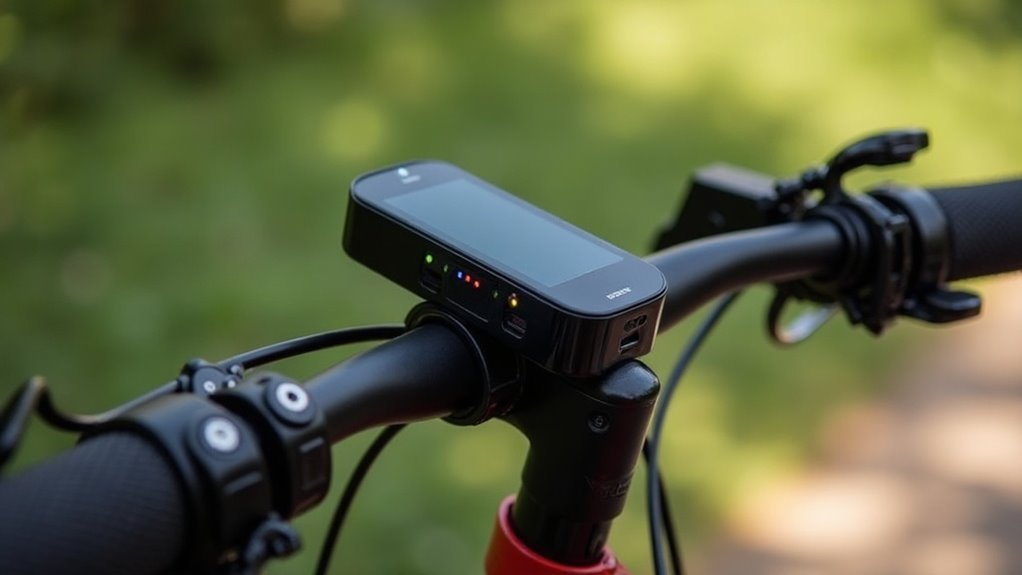
It connects smoothly to components like the battery, motor, throttle, and pedal-assist sensors, ensuring a responsive riding experience.
Various types of controllers, such as sine wave and square wave, impact the smoothness and efficiency of the ride.
Different controller types, like sine wave and square wave, significantly influence ride smoothness and overall efficiency.
Key features include compatibility with 36V or 48V systems, waterproof casings, and integrated current limiters that safeguard the motor and battery. Additionally, choosing the right controller can significantly enhance the overall e-bike experience.
Ultimately, the controller is crucial for enhancing both efficiency and your overall e-bike experience.
How E-Bike Controllers Operate
E-bike controllers manage power distribution by regulating the flow from the battery to the motor based on your inputs. They utilize real-time sensor data and firmware to adjust motor performance, ensuring smooth operation under varying conditions. Understanding these functions will enhance your appreciation of how they optimize your e-bike riding experience. Additionally, selecting the right battery management system can significantly improve your e-bike’s efficiency and longevity.
Power Distribution Management
When you ride an e-bike, the controller serves as the system’s brain, expertly managing power distribution from the battery to the motor. It continuously analyzes data from sensors, adjusting motor output based on your input and environmental conditions. Additionally, choosing the right e-bike motor can significantly enhance your overall riding experience.
Key aspects of power distribution management for e-bikes include:
- Compatibility with battery voltage for optimal performance
- Type of controller (square wave vs. sine wave) influencing power delivery and noise levels
- Implementation of safety features, such as speed limits and emergency stops
This precision ensures a responsive riding experience while maintaining safety, allowing you to fully enjoy the capabilities of your e-bike.
Sensor and Firmware Integration
As you ride your e-bike, the controller serves as the central processing unit, seamlessly integrating data from various sensors, such as pedal-assist and throttle, to precisely regulate motor power output.
The firmware processes this sensor data in real-time, ensuring smooth acceleration and responsive braking while conducting safety checks on motor operations.
By managing input from components, the controller efficiently allocates power from the battery to the motor, optimizing performance for diverse riding conditions.
Key internal components, like MOSFETs, enhance power management, minimizing energy loss.
Continuous monitoring enables the controller to adjust motor speed and power, contributing to a seamless biking experience. Additionally, choosing the right e-bike wheels can further enhance your ride by improving stability and control.
Types of E-Bike Controllers Explained
Controllers play a crucial role in determining how efficiently an e-bike operates. When considering an e-bike conversion, you’ll encounter various controller types, each with distinct advantages:
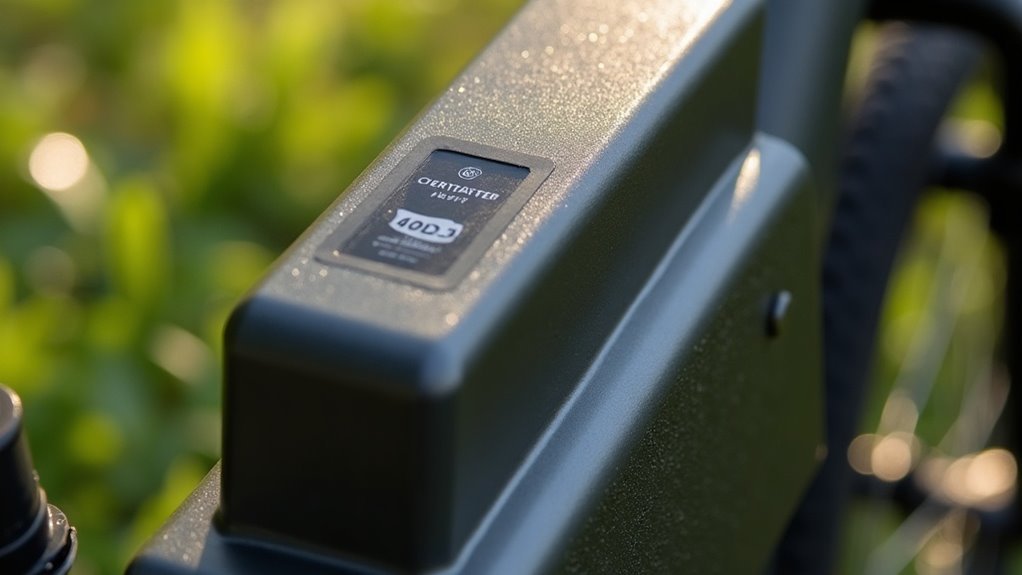
- Standard Battery Style Controllers: User-friendly and easy to mount.
- Box Style Controllers: Aesthetically integrated, ideal for hub-motored and folding bikes.
- Bafang Mid-Drive Controllers: Streamlined design, though maintenance can be complex.
Additionally, there are Sine Wave Controllers that provide smooth, quiet operation and enhanced torque, while Square Wave Controllers are more budget-friendly but tend to be noisier due to their abrupt power delivery. Choosing the right controller can significantly impact the overall efficiency of your e-bike and enhance your riding experience.
Essential Features for Choosing an E-Bike Controller
When selecting an e-bike controller, it’s essential to prioritize key specifications such as voltage compatibility and amperage capacity to ensure optimal performance.
Pay attention to the power output range to align with your motor’s requirements, and choose the appropriate type of controller that suits your riding style.
These considerations will significantly impact your e-bike’s efficiency and responsiveness on the road.
Key Specifications to Consider
Choosing the right e-bike controller involves understanding several key specifications that can greatly impact your riding experience. Here are three essential factors to consider:
- Battery Voltage: Ensure the controller is compatible with your battery’s voltage, typically 36V or 48V, for optimal safety and performance.
- Amperage Capacity: Look for options ranging from 22A to 60A, as this influences the controller’s power output and compatibility with your motor type.
- Programmability: Opt for controllers that allow customization of settings, enhancing your ride with tailored maximum speed and responsiveness.
Taking these factors into account will lead to a more enjoyable and efficient e-bike experience.
Power Output Range
Power Output Range for E-Bikes
The power output range is a crucial factor when selecting an e-bike controller, generally falling between 500W and 1500W. This range caters to various riding styles and terrains, ensuring you find the right power for your e-bike needs. The controller channels power from the battery to the motor, making it vital to match voltage specifications (36V or 48V) for optimal performance. Amperage ratings also play a significant role in determining maximum power delivery. Advanced controllers, such as sine wave types, enhance both efficiency and ride smoothness. Additionally, programmable features enable you to customize power output and pedal assist settings, tailoring your riding experience.
| Power Output | Amperage Rating |
|---|---|
| 500W | 22A |
| 750W | 30A |
| 1000W | 30A |
| 1200W | 35A |
| 1500W | 35A |
Controller Type Selection
Selecting the right e-bike controller is essential for maximizing performance and ensuring compatibility with your system. Focus on these critical aspects during the controller type selection process:
- Battery Voltage: Ensure it matches your battery (e.g., 36V or 48V) for optimal performance.
- Amperage Capacity: The controller should meet or exceed your motor’s wattage to avoid overheating issues.
- Input and Output Options: Look for support for both throttle and pedal assist to ensure a versatile riding experience.
Additionally, consider waterproof features for durability and programmable options for customized power output settings to enhance your e-bike journey.
Why Upgrade Your E-Bike Controller?
Upgrading your e-bike controller can significantly enhance your riding experience, especially if you’re looking for smoother acceleration and improved efficiency.
A high-quality e-bike controller improves performance by delivering better torque output and minimizing heat generation, particularly with sine wave technology.
Programmable controllers allow you to customize settings such as maximum speed and power output, tailoring your ride to your preferences.
Moreover, advanced features like regenerative braking enhance battery efficiency, extending your range.
Enhanced safety features, including current limiters, protect your motor and battery, ensuring longevity.
If your current controller is underperforming, switching to a higher amperage model can effectively tackle more challenging terrains.
Common E-Bike Controller Issues and Solutions
When you encounter issues with your e-bike controller, understanding the common problems can help you troubleshoot effectively. Here are some frequent issues you might face:
- Overheating: This can occur due to excessive current or inadequate ventilation. To address this, ensure better airflow or consider upgrading to a higher-rated controller.
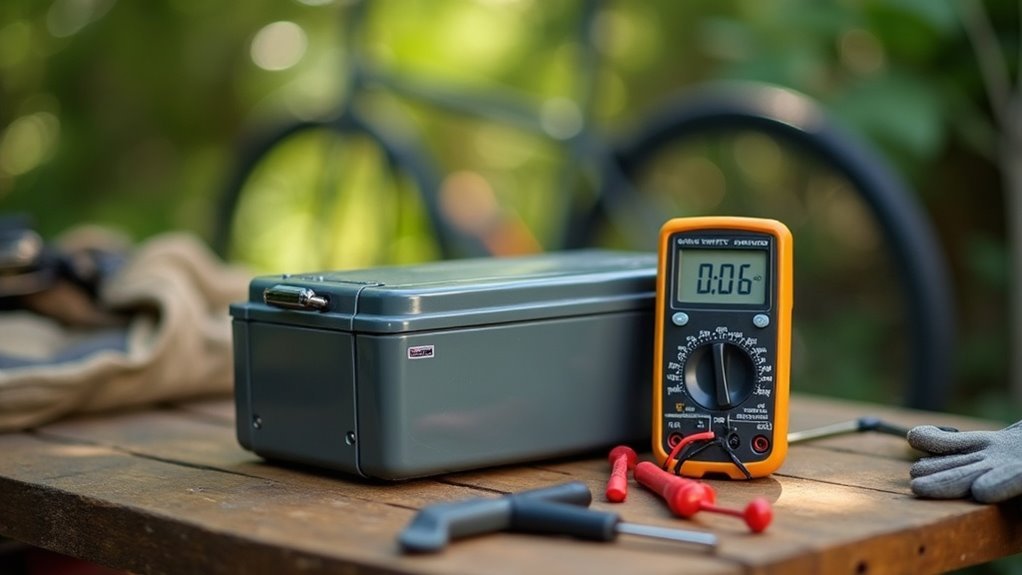
- Lack of motor response: If your motor isn’t responding, this may indicate a controller failure. Use a multimeter to check the output voltage and identify the issue.
- Flickering displays or error codes: These symptoms often suggest wiring issues that require careful inspection to resolve.
Upgrading to a sine wave controller can enhance the smoothness of your ride.
Regular maintenance and timely troubleshooting are essential to prolong your e-bike’s lifespan and prevent severe controller issues.
Future Trends in E-Bike Controller Technology
As e-bike technology progresses, controllers are set to integrate sophisticated AI algorithms that adapt in real-time to your riding habits and surrounding conditions. Future e-bike controllers will also feature advanced battery management systems, optimizing energy consumption by up to 15%. The shift towards wireless controllers will streamline installations, reducing clutter. Sine wave controllers are expected to lead the market, providing smoother acceleration and quieter operation.
| Feature | Benefit | Impact |
|---|---|---|
| AI Algorithms | Real-time adjustments | Enhanced safety |
| Battery Management | Extended battery life | Increased efficiency |
| Wireless Controllers | Simplified installation | Less clutter |
| Sine Wave Controllers | Quieter, smoother rides | Improved riding experience |
This focus on e-bike controller technology highlights the advancements that will enhance performance and user experience in the coming years.