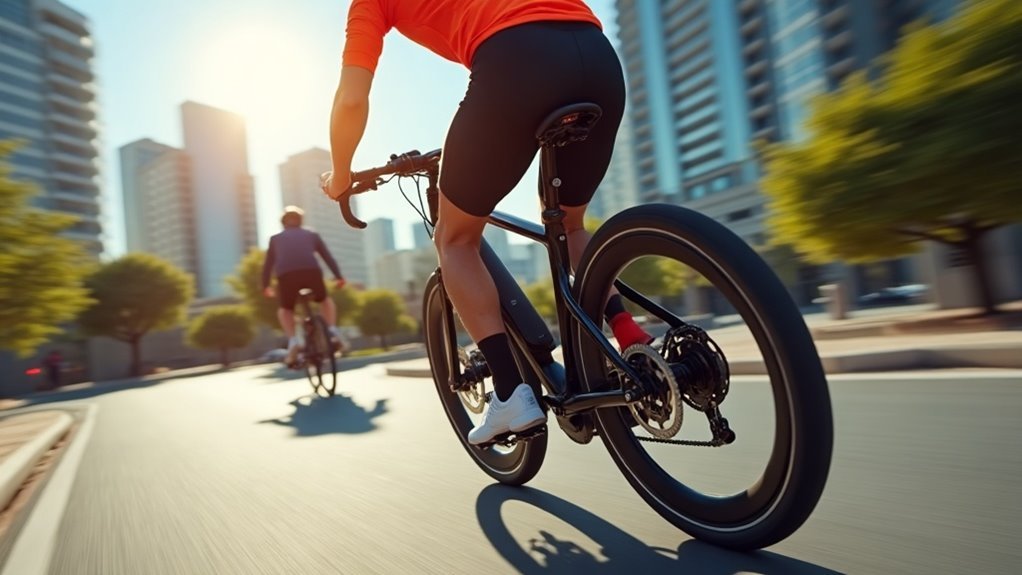
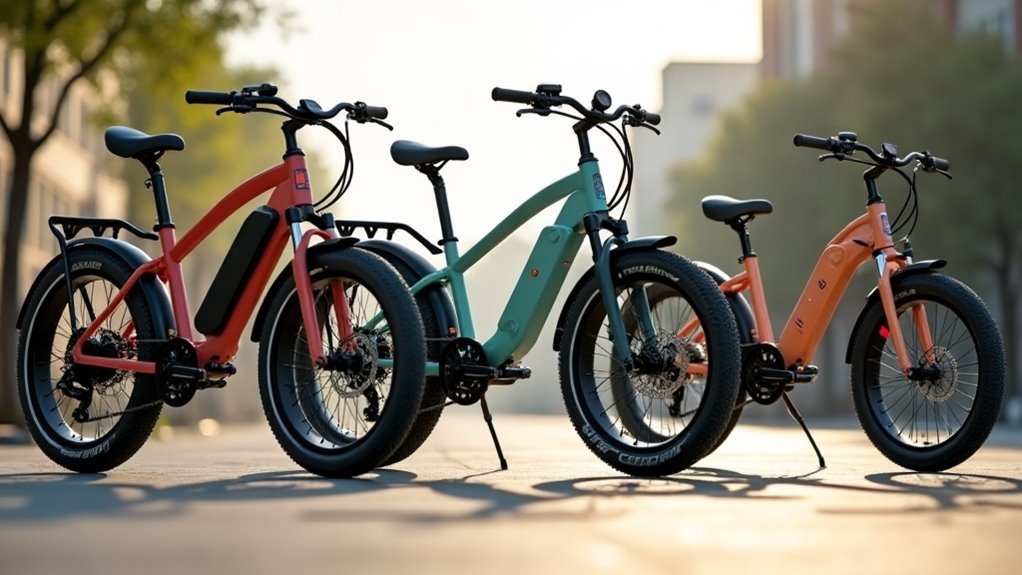
Electric bicycles are classified into three distinct categories. Class 1 features pedal-assist up to 20 mph without a throttle, making it ideal for traditional cyclists. Class 2 includes a throttle for easier starts while also capping at 20 mph, perfect for casual riders. Class 3 offers pedal-assist up to 28 mph and mandates helmets for riders under 17. Each class has unique characteristics, so it’s essential to consider your riding preferences and needs when selecting the right e-bike for you.
Key Takeaways
- Class 1 E-Bikes: These bikes provide pedal assist up to 20 mph, requiring pedaling to engage the motor, and they do not include a throttle option.
- Class 2 E-Bikes: Featuring both pedal assist and throttle capabilities, these bikes allow speeds up to 20 mph without the need to pedal, making them suitable for leisure riders.
- Class 3 E-Bikes: Designed for higher speeds, these bikes offer pedal assist up to 28 mph. Helmet use is mandatory for riders under 17, making them ideal for quicker commutes.
- Riding Style Considerations: Class 1 is tailored for traditional cycling experiences, Class 2 emphasizes convenience, and Class 3 focuses on speed and efficient commuting.
- Local Regulations: It’s essential to verify local laws regarding age limits and helmet mandates for each class of e-bike.
The Three Classes of E-Bikes Explained
When exploring electric bicycles, it’s essential to understand the three distinct classes that define their functionality and use.
Class 1 e-bikes offer pedal assist up to 20 mph, requiring you to pedal for motor support.
Class 1 e-bikes provide pedal assist up to 20 mph, ensuring you pedal to engage the motor support.
Class 2 e-bikes also provide pedal assist but include a throttle feature, making them suitable for casual riders, with the same speed limitation.
Class 3 e-bikes, designed for higher speeds, support pedal assist up to 28 mph, necessitating helmet use for riders under 17.
Familiarizing yourself with local regulations is vital, as these classifications dictate where you can ride, including bike lanes and applicable restrictions.
How Class 1, Class 2, and Class 3 E-Bikes Differ
Understanding how Class 1, Class 2, and Class 3 e-bikes differ is essential for choosing the right model for your needs. Here’s a breakdown:
- Class 1: Pedal-assist only; assists you while pedaling up to 20 mph.
- Class 2: Features both pedal-assist and throttle capabilities; can reach 20 mph without pedaling.
- Class 3: Pedal-assist only; helps you achieve higher speeds of up to 28 mph, necessitating additional safety gear.
- Age and Helmet Requirements: Riders must be at least 16 for Class 2 and Class 3, with helmet mandates for those under 18. Additionally, understanding the best e scooter batteries can enhance your overall riding experience.
What You Need to Know Before Choosing an E-Bike Class?
Choosing the right e-bike class requires careful consideration of your specific needs and riding conditions.
Understand that Class 1 and Class 2 e-bikes assist up to 20 mph, while Class 3 models can reach 28 mph. Class 1 and Class 3 rely on pedal-assist, whereas Class 2 offers both pedal-assist and throttle for easier starts.
Always check local regulations regarding age restrictions and helmet requirements, especially for Class 3 riders, who are encouraged to wear safety gear due to higher speeds.
Finally, consider your riding style: Class 1 for traditional experiences, Class 2 for added convenience, or Class 3 for faster commuting. Additionally, understanding the best electric bikes can help you make a more informed choice tailored to your preferences.