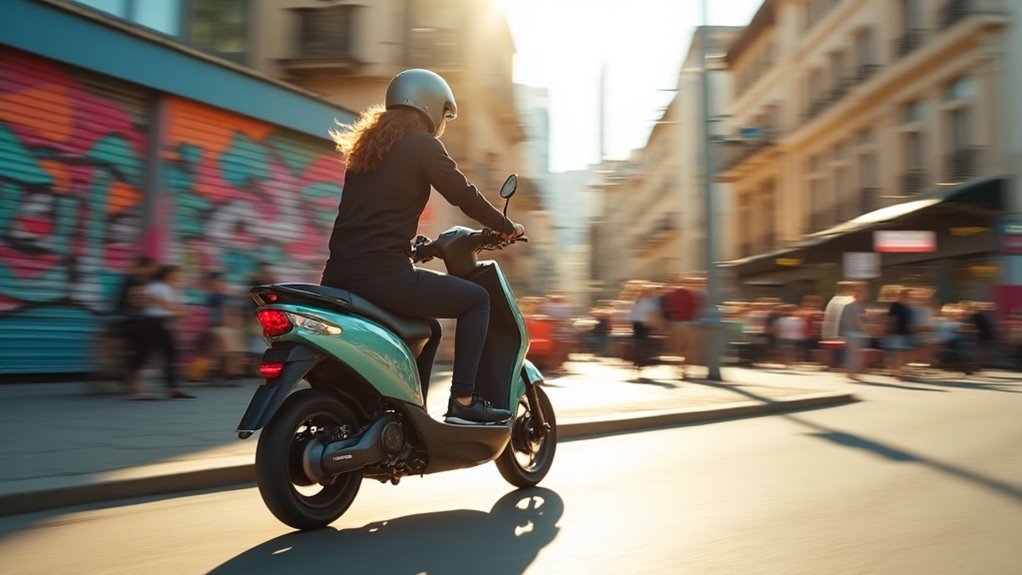
Electric scooters can typically reach speeds from 10 to over 30 mph, depending on the model. Entry-level scooters generally go around 10-20 mph, while mid-range options can hit 20-30 mph, making them suitable for longer commutes. High-performance models may exceed 30 mph for those seeking an adrenaline rush. It’s important to note that local regulations often limit speeds to 15-20 mph on public roads. Additionally, factors like rider weight and terrain can influence speed. Keep reading to learn more about safety features and legal considerations!
Key Takeaways
- Entry-level electric scooters typically reach speeds between 10-20 mph, making them suitable for casual commuting.
- Mid-range models can achieve speeds of 20-30 mph, ideal for longer trips.
- High-performance scooters exceed 30 mph, catering to thrill-seekers and experienced riders.
- Local regulations often limit speeds to 15-20 mph on public roads to ensure safety.
- Factors such as rider weight, terrain, and battery condition significantly influence scooter speed and overall performance.
The Speed Spectrum of Electric Scooters
When you hop on an electric scooter, the speed can vary dramatically based on the model you choose. Entry-level models typically reach speeds of 10-20 mph, perfect for casual rides.
If you’re looking for something faster, high-performance models can exceed 30 mph, catering to thrill-seekers. Mid-range scooters, with motor power between 500W to 1000W, hit the sweet spot of 20-30 mph, making them ideal for longer commutes.
However, always check local regulations, as many areas limit speeds to 15-20 mph. Remember, factors like rider weight and terrain can also influence your scooter’s speed and overall performance. Moreover, the right battery type can significantly impact your scooter’s speed and efficiency.
Factors Affecting Electric Scooter Speed and Performance
Several factors influence the speed and performance of electric scooters, making it essential to understand how these elements interact.
Motor power is critical; entry-level models typically offer 250W, while high-performance scooters can exceed 2000W, significantly affecting top speeds.
Motor power is essential, with entry-level scooters at 250W and high-performance models exceeding 2000W for optimal speeds.
Rider weight also plays a crucial role; heavier riders may experience reduced acceleration and speed.
Terrain quality is another important factor—smooth surfaces enable peak performance, while hills and rough paths can impede speed.
Additionally, battery condition directly impacts power delivery; a well-maintained battery ensures consistent performance.
Lastly, aerodynamic design, including rider posture, can enhance speed, particularly at higher velocities. Moreover, the choice of ESC modules for scooters can greatly influence overall performance and responsiveness.
What Are the Legal Speed Limits for Electric Scooters?
Electric scooters are popular for their convenience and speed, but riding them legally requires understanding local regulations.
Many regions impose legal speed limits, typically capping e-scooters at 15-20 mph on public roads. Some cities even allow higher speeds, reaching up to 30 mph in designated bike lanes.
However, regulations can vary greatly by state or country, so it’s essential to check local laws before you ride. If your scooter exceeds 20 mph, you might need registration or a specific license.
Staying compliant with speed limits is vital for your safety and helps you avoid fines from law enforcement.
Essential Safety Features for High-Speed Electric Scooters
While the thrill of riding high-speed electric scooters can be exhilarating, prioritizing safety features is essential for a secure experience.
Advanced braking systems, such as hydraulic or disc brakes, ensure effective stopping power, which is crucial when speeds exceed 30 mph. Stability control features help prevent accidents during rapid acceleration and cornering.
Always wear a helmet, as regulations often mandate their use for high-speed scooters, significantly reducing the risk of head injuries. Additionally, protective gear—like gloves and knee pads—can help mitigate injuries from falls or collisions.
Regular maintenance, including checking tire pressure and brake function, is fundamental for optimal performance and safety. Investing in a reliable scooter steering column lock can further enhance security against theft while ensuring your scooter remains in top condition.
E-Scooter Speed Comparisons and Value for Money
When it comes to choosing an electric scooter, understanding speed variations and their corresponding value can greatly impact your riding experience.
Here’s how different e-scooter models stack up regarding speed ratings and cost efficiency:
- Entry-level scooters: 10-20 mph, perfect for casual urban rides.
- Mid-range models: 20-30 mph, offering better battery life for longer trips.
- High-performance scooters: Over 30 mph, ideal for thrill-seekers.
- Specialty scooters: 90-105 mph, requiring registration but delivering unmatched speed.
Additionally, scooter performance is influenced by factors such as weight, terrain, and battery capacity.