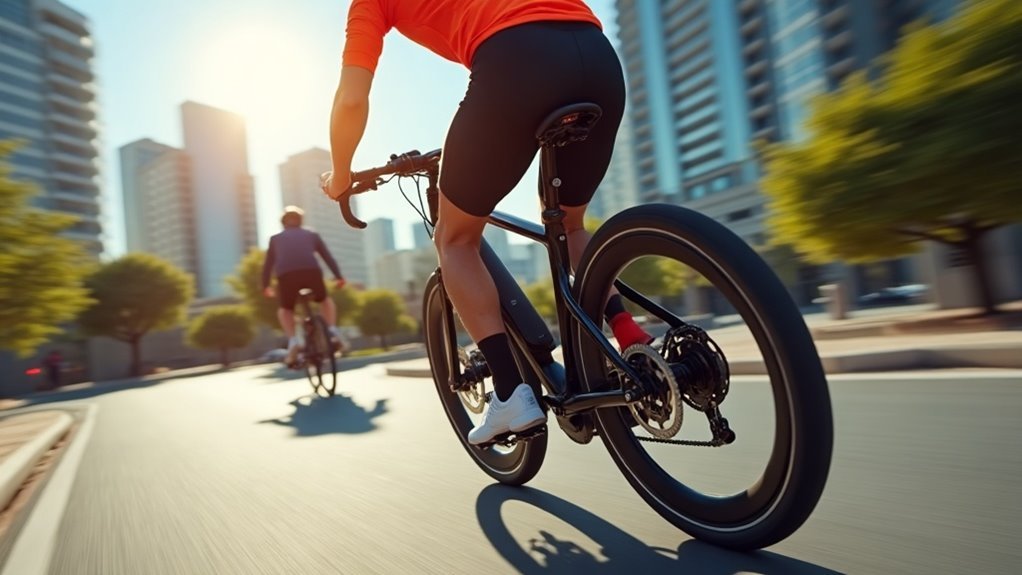
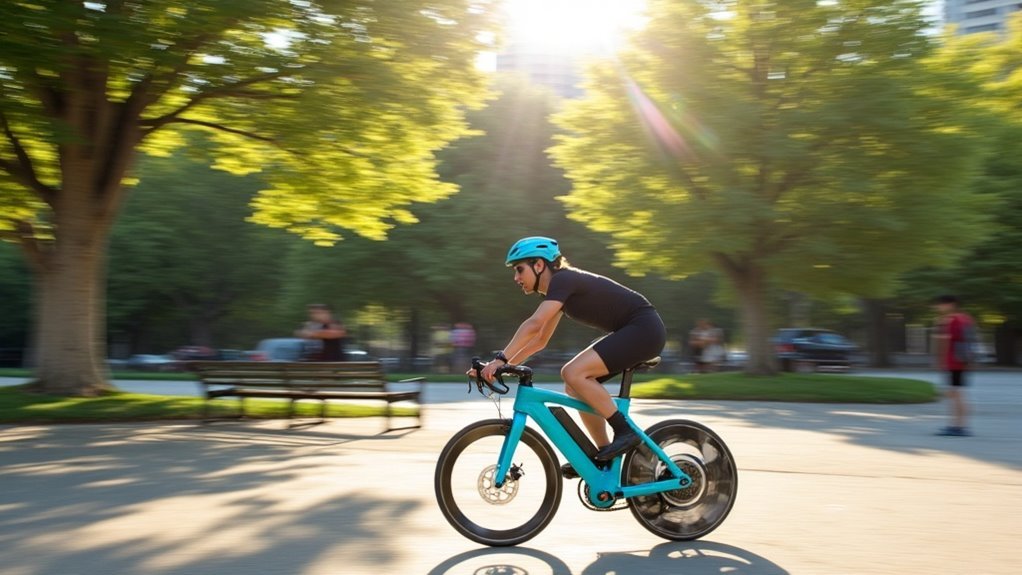
Electric bikes can reach speeds of up to 28 mph, depending on their classification. Class 1 and Class 2 e-bikes assist riders up to 20 mph, while Class 3 allows for higher speeds when pedaling. Typically, motor power ranges from 250 to 750 watts. Factors such as rider weight and terrain can also influence speed. Familiarizing yourself with e-bike classes and regulations can help you select the best option for your needs, enhancing your riding experience!
Key Takeaways
- Class 1 and Class 2 e-bikes are limited to a maximum speed of 20 mph.
- Class 3 e-bikes can provide assistance for speeds up to 28 mph while pedaling.
- E-bike speeds may vary based on rider weight and the type of terrain.
- Motor power usually ranges from 250 to 750 watts, influencing acceleration.
- Local regulations may impose additional speed limits beyond e-bike classifications.
How Fast Can Electric Bikes Actually Go?
How fast can electric bikes actually go? The speed limit for electric bikes varies by class: Class 1 and Class 2 bikes are capped at 20 mph, while Class 3 bikes can assist up to 28 mph when pedaling.
The motor power, usually between 250 and 750 watts, significantly influences speed and acceleration. Additionally, factors like rider weight and terrain play crucial roles. Understanding the best electric bikes can help you choose a model that meets your speed preferences.
Although some advanced models may exceed these limits, doing so could categorize them as mopeds or motorcycles. Understanding your e-bike class is essential for optimizing both speed and safety during your rides.
What Are the Different E-Bike Classes and Their Speeds?
When exploring the world of electric bicycles (e-bikes), it’s essential to understand the different e-bike classes and their speed capabilities.
Class 1 e-bikes provide pedal assistance up to 20 mph, making them ideal for commuting and recreational rides.
Class 1 e-bikes offer pedal assistance up to 20 mph, perfect for both commuting and leisurely rides.
Class 2 e-bikes also reach 20 mph and include a throttle, allowing for effortless rides without pedaling.
For those who crave speed, Class 3 e-bikes offer pedal assistance up to 28 mph, perfect for faster commuting and sportier outings.
All e-bike classes are limited to a maximum motor power of 750 watts, ensuring safety and compliance with road regulations.
Factors That Affect E-Bike Speed: Weight, Terrain, and More
While you might think that e-bike speed is solely determined by the motor, several factors come into play that can greatly influence your ride.
The combined weight of you and your e-bike impacts speed; lighter riders typically achieve higher speeds more easily.
Terrain also plays a critical role—flat, paved surfaces allow you to reach maximum speeds, while hills and rough trails can slow you down.
Additionally, your input matters; active pedaling enhances efficiency and can push you beyond the motor’s limits.
Don’t forget environmental factors like wind resistance, which can either hinder or help your progress on the road.
Choosing the right commuter tires can also significantly improve your overall speed and efficiency.
How Laws Affect E-Bike Speed?
Understanding how laws impact e-bike speed is essential for any rider looking to maximize their experience while staying within the legal framework. In the U.S., e-bikes are classified into three categories, with Class 3 electric bikes allowed to assist up to 28 mph. Local laws often impose additional speed limits and restrictions on where you can ride, affecting your overall experience. Here’s a quick overview of the classifications and their legal speed limits:
| E-Bike Class | Max Speed | Motor Power |
|---|---|---|
| Class 1 | 20 mph | 750 watts |
| Class 2 | 20 mph | 750 watts |
| Class 3 | 28 mph | 750 watts |
Familiarizing yourself with these classifications and local regulations is crucial for a safe and enjoyable ride.
How to Choose the Best E-Bike Based on Speed Requirements
Navigating the different e-bike classes and their regulations is essential for identifying the model that meets your speed requirements.
If you’re looking for an electric bike with high-speed capabilities, consider Class 3 e-bikes, which provide assistance up to 28 mph—ideal for quick commutes.
For more relaxed rides, Class 1 and Class 2 e-bikes are limited to a maximum speed of 20 mph.
It’s also important to assess motor power; models equipped with 750W+ motors deliver superior acceleration and performance, particularly on inclines.
Additionally, take into account your terrain and weight, as these factors significantly impact speed and efficiency. Understanding e-bike classes can help you make a well-informed choice.
Choose wisely to find the e-bike that aligns with your riding style.