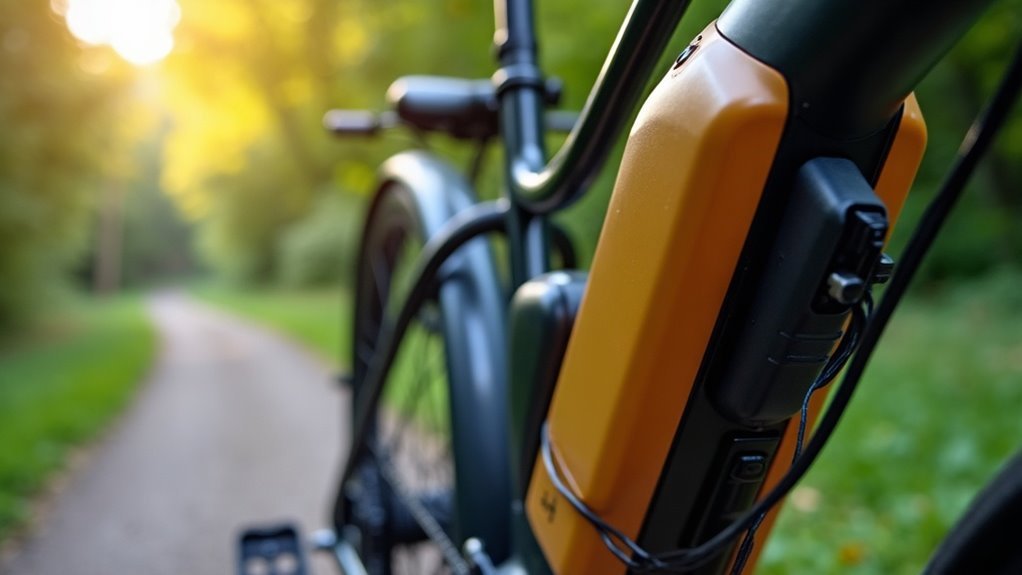
Electric bicycles work by integrating a motor, battery, and sensors to enhance your pedaling experience. When you pedal, the brushless DC motor engages, providing additional power based on your effort. The lithium-ion battery supplies energy, impacting your range and overall efficiency. Smart sensors monitor your pedaling motion and adjust assistance in real-time. With modes like pedal-assist or throttle-only, you can tailor your ride to your preferences. There’s much more to discover about e-bike technology and its capabilities as you delve deeper.
Key Takeaways
Electric bicycles, or e-bikes, utilize a motor, battery, and controller to enhance traditional cycling, offering improved efficiency and performance. The motor engages when the rider pedals, delivering extra power based on the cyclist’s effort through built-in sensors.
Lightweight lithium-ion batteries play a crucial role, with their capacity influencing both the range and charging times; they typically last for about 1,000 charge cycles. E-bikes come with various riding modes, such as Pedal Only, Pedal-Assist, and Electric-Only, allowing riders to customize their experience according to different terrains and personal preferences.
Smart Assist technology further optimizes the riding experience by automatically adjusting motor support based on real-time data.
What Is an Electric Bicycle?
An electric bicycle, or e-bike, merges cutting-edge technology with traditional cycling to elevate your riding experience. E-bikes come equipped with a motor, battery, and controller, offering significant advantages such as reduced effort and enhanced efficiency.
Over time, electric bicycles have progressed from simple designs to advanced models, featuring motors capped at 750W in the U.S. These bikes utilize lithium-ion batteries that provide a range of 20 to 80 miles per charge, depending on various conditions.
With options for pedal assist and throttle assist, e-bikes are designed to meet diverse needs, whether you’re commuting or enjoying leisurely rides across urban, mountain, or hybrid terrains. Additionally, selecting the right e-scooter battery can significantly impact your overall riding experience and performance.
How Does the Motor Assist in Pedaling?
How does the motor enhance your e-bike pedaling experience? The motor provides pedal assistance by activating as you begin to pedal, delivering additional power for smoother rides. This efficient brushless DC motor design minimizes maintenance and maximizes performance.
- Sensors detect your pedaling effort, adjusting assistance to match your needs.
- Typical output is around 250 watts, ensuring responsive power delivery.
- You can reach speeds up to 15.5 mph with pedal assist.
- The combined force of the motor and your pedaling makes tackling hills and long distances easier.
With this seamless integration, your e-bike journey becomes more enjoyable and accessible. Additionally, the best electric bikes cater to a variety of preferences and budgets, ensuring there’s an option for everyone.
How Does the Battery Power Your E-Bike?
Your e-bike’s battery, typically a lightweight lithium-ion type, is crucial for powering its motor and essential components.
Understanding the types of batteries, the charging process, and how these elements influence your bike’s range can significantly enhance your riding experience. Additionally, selecting the right battery charger can greatly impact the efficiency and longevity of your battery.
Let’s delve into how these factors work together to optimize your e-bike’s performance.
Battery Types Explained
While electric bicycles have gained significant popularity, understanding the battery types that power them is crucial for optimizing performance. Most e-bikes utilize lithium-ion batteries due to their advantageous chemistry, which offers:
- Lightweight design for improved handling
- Capacities of 24V, 36V, and 48V for varying distances
- Charging times of 5 to 6 hours, ideal for everyday use
- Placement that affects weight distribution and ride quality
Comparing capacities among these configurations can greatly influence your ride, enabling longer journeys while managing overall weight. Additionally, choosing the perfect battery can enhance your overall e-bike experience and efficiency.
Battery efficiency is vital, as it directly impacts your e-bike’s performance.
Charging Process Overview
Charging an electric bicycle battery is a straightforward process that’s essential for optimal performance. Typically, you plug your lithium-ion battery into a standard wall outlet, with charging times ranging from 2 to 8 hours, depending on its capacity.
To enhance charging efficiency, avoid deep discharges and extreme temperatures, as these can negatively affect the battery’s lifespan. Most lithium-ion batteries can endure approximately 1,000 charge cycles before experiencing significant capacity loss. Additionally, choosing the right brake pads can improve overall performance and safety during rides.
Proper maintenance not only improves performance but also helps you make the most of your e-bike’s range on a single charge, enhancing your overall riding experience.
Impact on Range
The capacity of an electric bicycle’s battery is crucial in determining how far you can travel on a single charge. Several factors influence this range, including:
- Battery size, typically measured in watt-hours (Wh)
- Voltage levels, such as 24V, 36V, and 48V, which impact overall efficiency
- Riding conditions, including terrain and weather, which affect energy consumption
- Battery placement, which influences bike balance and control
Lithium-ion batteries are preferred due to their lightweight nature and longevity.
Understanding battery efficiency is essential for maximizing your e-bike’s range, enabling you to plan your rides effectively and avoid running out of power unexpectedly.
How Do Sensors Improve Your Ride?
Sensors play a crucial role in enhancing your e-bike ride by detecting pedaling motion through advanced cadence and torque measurements. This technology ensures that the motor activates immediately as you begin pedaling, providing a smooth and effortless start.
Torque sensors dynamically adjust power output to align with your effort, optimizing riding efficiency. Real-time data helps conserve energy, extending your e-bike’s range.
Many e-bikes offer multiple assistance levels, allowing you to customize your experience based on the terrain and your preferences. By continuously monitoring your input and surrounding conditions, sensors ensure a seamless, responsive ride, enhancing handling and overall comfort.
What Are the Different Riding Modes for E-Bikes?
E-bikes typically offer three distinct riding modes, each tailored to different rider preferences and conditions:
- Pedal Only: Operates like a traditional bicycle, with no motor assistance.
- Pedal-Assist: Provides motor support based on your pedaling effort, enhancing the overall riding experience.
- Electric-Only: Propels the bike without pedaling, adhering to regulations that limit speed to 20 mph.
- Smart Assist: Automatically adjusts motor support using real-time data for a more intuitive ride.
Selecting the appropriate mode not only enhances your riding experience but also optimizes e-bike efficiency, helping to conserve battery life while providing ideal motor support based on your terrain and preferences.
Choosing the Right E-Bike for You
When selecting the right e-bike for your needs, it’s essential to evaluate various factors that directly impact your riding experience. Consider terrain and your riding style. Test ride models to find what fits your body and preferences. Focus on battery capacity—aim for 20 to 80 miles per charge—and motor types such as hub-drive or mid-drive that suit your requirements.
| Feature | Importance | Options |
|---|---|---|
| Terrain Type | Choose based on use | Mountain, Urban, Hybrid |
| Battery Capacity | Range for your rides | 20-80 miles |
| Motor Type | Performance & maintenance | Hub-drive, Mid-drive |