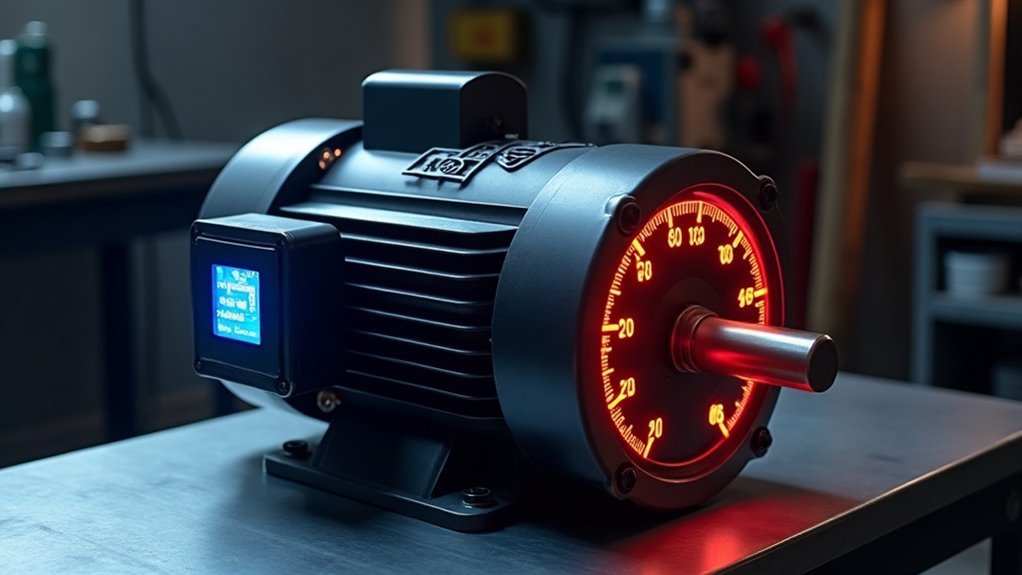
Nominal power refers to the continuous output a motor can maintain without overheating, which is crucial for consistent performance on flat surfaces. In contrast, peak power indicates short bursts of maximum output, ideal for rapid acceleration and tackling steep inclines, though it poses a risk of overheating if used excessively. When selecting motor power for your e-bike, consider your riding terrain and style to maximize efficiency. Understanding these distinctions can significantly enhance your e-bike experience, and further insights are available to help you refine your choice.
Key Takeaways
- Nominal power refers to the continuous output an e-bike motor can sustain without overheating, ensuring reliable performance under normal riding conditions.
- Peak power indicates the maximum output for short bursts, which is essential for acceleration and tackling inclines but can lead to overheating with prolonged use.
- Heat management is crucial; nominal power minimizes thermal stress, while frequent peak power usage can result in overheating and potential motor damage.
- Terrain impacts e-bike motor power needs; 250W-500W is ideal for flat surfaces, while hilly areas require at least 750W for effective climbing.
- Load capacity affects performance; higher power ratings handle extra weight better, but balancing peak and nominal power is vital for battery longevity.
What Is Nominal Power and Why It Matters for E-Bikes
Nominal power is a crucial metric for understanding e-bike performance. It indicates the continuous power output that an e-bike motor can sustain without overheating, ensuring dependable operation during extended rides.
E-bike motors are commonly rated at levels like 250W, 500W, or 750W, which reflect their efficiency under varying conditions. Familiarizing yourself with your e-bike’s nominal power is key to setting realistic performance expectations, particularly on flat surfaces and moderate slopes.
Additionally, regulations, such as the 250W limit in Europe, play a significant role in these ratings. Prioritizing nominal power over peak power is vital; relying solely on peak values can lead to overheating and potential motor damage, jeopardizing long-term reliability. Furthermore, understanding how to choose the right battery charger can enhance your e-bike’s overall performance and longevity.
What You Need to Know About Peak Power
Understanding how peak power interacts with nominal power is essential for optimizing e-bike performance. Peak power represents the maximum motor output for short bursts, often 1.5 to 2 times the nominal power rating. While it’s vital for rapid acceleration and tackling steep inclines, prolonged use can lead to overheating, necessitating cooling time before returning to nominal output. Setting realistic performance expectations hinges on grasping these dynamics. Additionally, selecting the right e-scooter battery can significantly enhance both peak and nominal performance.
| Aspect | Description |
|---|---|
| Peak Power | Maximum output for short bursts |
| Nominal Power | Continuous power rating |
| Motor Output | Varies between peak and nominal |
| Overheating Risk | Increases with sustained peak power |
| Cooling Time | Required after peak power usage |
Comparing Nominal and Peak Power: Key Differences Explained
When comparing nominal and peak motor power for e-bikes, you’ll encounter key performance metrics that highlight their differences.
Understanding heat management considerations is vital, as sustained peak power can lead to overheating, unlike nominal power, which ensures safe operation.
Real-world applications also vary, with nominal power suited for efficiency and reliability, while peak power is crucial for tackling demanding terrains and acceleration needs.
Key Performance Metrics
To effectively assess e-bike motor performance, it’s crucial to differentiate between rated power and peak power, as each plays a distinct role in operation.
Rated power reflects the continuous output you can expect without overheating, ensuring reliable performance over time.
On the other hand, peak power can exceed rated power by 1.5 to 2 times, offering bursts for acceleration or tackling steep climbs, but it also increases battery consumption and poses overheating risks.
When selecting an e-bike, understanding these performance factors is essential; while a 250W motor may be adequate for flat terrains, a higher-rated motor is recommended for challenging conditions or carrying heavier loads. Additionally, considering the best electric bikes can guide your choice based on these performance metrics.
Heat Management Considerations
While evaluating e-bike motor performance, heat management becomes a critical consideration when comparing nominal and peak power.
Nominal power enables continuous operation without overheating, promoting efficient energy consumption and reducing thermal stress.
Conversely, peak power provides brief bursts of high output but results in significant heat buildup, necessitating cooling periods that temporarily hinder performance.
Relying too frequently on peak power can jeopardize motor longevity due to increased strain and the risk of overheating.
Grasping these heat management implications is vital for optimizing performance in demanding situations, helping to enhance your e-bike’s efficiency and extend its lifespan. Additionally, understanding e-bike motor types can further inform your selection process.
Real-World Applications
Understanding how nominal and peak power apply in real-world scenarios is vital for making informed decisions about e-bike performance. Nominal power indicates the continuous motor output you can rely on, such as a 250W motor for flat terrains. In contrast, peak power allows for short bursts, essential for hill-climbing ability—like a 750W motor briefly delivering higher output without overheating.
For consistent rides, prioritize higher nominal power. However, for challenging situations like steep inclines or quick accelerations, peak power is advantageous. Additionally, selecting the right e-bike wheels can significantly impact how effectively your motor power is utilized.
Evaluating these aspects ensures your electric bike meets your specific riding needs effectively.
How Nominal Power Impacts Your Ride
When you ride an e-bike, the nominal power of the motor significantly shapes your experience. This continuous wattage, usually ranging from 250W to 750W, ensures dependable performance on flat terrain and moderate inclines.
Staying within this power range offers consistent torque and enhances battery longevity, making it more energy-efficient than relying on peak power bursts. Grasping the concept of nominal power allows you to set realistic expectations and boosts durability, reducing the risk of overheating and damage.
Choosing a motor with the appropriate nominal power rating fine-tunes your ride, aligning performance with safe and sustainable operation.
The Role of Peak Power in Acceleration and Climbing
The Role of Peak Power in Acceleration and Climbing for E-Bikes
Peak power is crucial for your e-bike’s ability to accelerate swiftly and conquer steep inclines. It enables the motor to deliver higher wattage in short bursts, significantly improving performance.
Consider these key points:
- Acceleration: Peak power facilitates rapid starts and quick bursts of speed.
- Climbing: It provides the necessary torque for tackling steep gradients.
- Output Duration: Peak power typically lasts from fractions of a second to 1-2 seconds.
- Overheating Risk: Prolonged peak power usage can lead to overheating, requiring careful management.
Balancing nominal and peak power ensures optimal e-bike performance across various terrains.
How to Choose the Right Motor Power for Your Riding Style
When selecting the right motor power for your e-bike, consider the terrain you’ll be riding on, your distance requirements, and the load you’ll carry.
For flat urban commuting, a motor between 250W and 500W may suffice, but for hilly routes, you’ll want at least 750W to ensure adequate torque.
Balancing these factors will guarantee optimal performance and efficiency tailored to your riding style.
Terrain Considerations
Terrain Considerations for E-Bikes
Selecting the right motor power for your e-bike hinges on understanding the terrain you’ll encounter. Consider these factors:
- Flat Terrain: A motor with a nominal wattage rating of 250W to 500W usually suffices, ensuring efficient battery use.
- Steep Hills: For adequate torque demand, opt for at least a 750W rated power motor to handle inclines effectively.
- Off-Road Conditions: Choose motors with higher peak power to manage sudden power demands during challenging rides.
- Cargo Loads: If carrying weight, robust peak power ratings are essential for maintaining overall performance without overheating your e-bike power system.
Riding Distance
Understanding your riding distance is essential for selecting the right motor power for your e-bike. For urban commuting on flat terrain, a nominal power of 250W to 500W is generally adequate for distances up to 20-30 kilometers.
However, if you intend to navigate hilly areas, it’s advisable to choose motors with at least 750W to ensure sufficient power output. While peak power ratings up to 2000W can provide bursts of acceleration, they shouldn’t be depended upon for sustained performance.
Additionally, take into account battery capacity and motor efficiency; motors running at nominal power facilitate longer rides, making them well-suited for your specific riding distance requirements.
Load Capacity
Choosing the right motor power for your e-bike depends on your load capacity needs, particularly if you plan to carry cargo or have a passenger.
Consider the following factors:
- Urban Commuting: A nominal power of 250W to 500W is ideal for flat terrain.
- Hilly Terrain: For effective climbing, opt for 750W or higher.
- Cargo Weight: Motors with higher peak power are better equipped to handle extra weight during acceleration.
- Battery Life: Keep in mind that high peak power can drain the battery faster; balancing performance with capacity is crucial for longer rides and to prevent overheating.
Evaluate these aspects to enhance your e-bike’s performance and overall riding experience.
Common Myths About Nominal and Peak Power Ratings
While many consumers focus on peak power ratings when evaluating e-bikes, it’s important to recognize that these figures can create misconceptions about overall performance.
Higher peak power doesn’t necessarily indicate motor quality; nominal power is vital for reliable continuous performance. Peak power is only meant for short bursts and can lead to overheating if sustained.
Misunderstanding this can skew consumer expectations, especially for long-distance rides, where rated power reflects true efficiency.
Many manufacturers emphasize peak values in marketing, but it’s the nominal ratings that truly matter for everyday use, ensuring durability and optimal performance over time.