Electric scooters gained popularity in the early 2000s, driven by advancements in battery technology and the emergence of e-scooter sharing services. These developments made scooters lighter, more efficient, and easily accessible through smartphone apps, allowing users to pick them up or drop them off conveniently. This shift significantly transformed urban mobility, as residents increasingly embraced this eco-friendly transportation option, leading to a surge in demand. If you’re interested in exploring the unique features and trends that have contributed to the rise of electric scooters, there’s a wealth of information available.
Key Takeaways
- The popularity of electric scooters surged in the late 2010s, aligning with urban mobility trends and a growing focus on sustainable transportation.
- The launch of app-based rental services like Lime and Bird in 2017 significantly enhanced the accessibility and usage of e-scooters in urban settings.
- Technological advancements, especially in battery efficiency, played a key role in making electric scooters appealing to a broader audience around 2015.
- Enhanced safety features and smart connectivity options increased user confidence, making e-scooters a viable choice for daily commuting.
- By the late 2010s, the rapid expansion of e-scooter sharing services established electric scooters as a convenient alternative to traditional transportation methods in cities.
The Early Days of Electric Scooters: A Fun History
While you might think electric scooters are a modern invention, their roots actually stretch back over a century. The evolution of e-scooters began in 1915 with the Autoped, one of the first motorized scooters for adults.
Fast forward to the late 20th century, when early models emerged, offering limited speed and battery life. A significant milestone occurred in 2001, when Go-Ped introduced the first full-suspension stand-up electric scooter, paving the way for future designs.
The advent of lithium-ion batteries in the 1990s further transformed e-scooters, enhancing performance and range. These historical milestones set the stage for the e-scooter boom we see today, highlighting how advancements in e-bike motors have influenced personal transportation options.
Key Innovations That Made Electric Scooters Popular
Electric scooters have surged in popularity thanks to several key innovations that transformed them from niche gadgets to essential urban transport.
Here are three significant advancements:
- Battery Technology: The development of lithium-ion batteries has made scooters lighter and more efficient, enhancing overall performance.
- Enhanced Safety Features: Innovations such as built-in lights, turn signals, and regenerative braking have improved rider safety, making them more appealing to commuters.
- Smart Connectivity: GPS tracking and app-based rental systems have streamlined access, effectively integrating e-scooters into urban transport networks and addressing the “first-mile, last-mile” dilemma. Additionally, the rise of e-bike conversion kits has provided consumers with more options for personalizing their electric mobility solutions.
These innovations have created an appealing, convenient, and safer option for urban mobility.
Why Urban Areas Love Electric Scooters
As urban areas grapple with increasing traffic congestion and environmental concerns, electric scooters have emerged as a favored solution among city dwellers.
These scooters offer unparalleled convenience, being easily accessible through smartphone apps, making them ideal for both commuters and tourists.
Studies reveal that e-scooter sharing can significantly alter transportation patterns, reducing the number of cars on the road.
Furthermore, the environmental benefits are noteworthy; replacing car trips with e-scooter rides can dramatically cut CO2 emissions, promoting cleaner air.
With advancements in battery technology and efficiency, electric scooters are now practical and effective choices for urban mobility. Additionally, the best electric scooters cater to a variety of user needs, enhancing their appeal in crowded cities.
How E-Scooter Sharing Services Transformed Urban Mobility
The rise of e-scooter sharing services has fundamentally reshaped urban mobility, offering a fresh alternative to traditional transportation methods.
These services enhance user experience through:
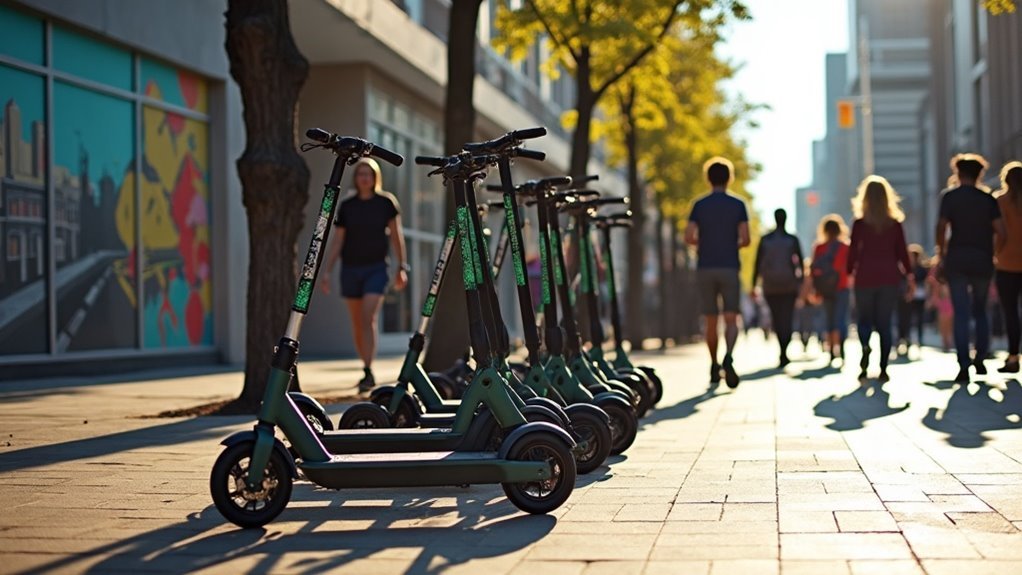
- Convenience: App-based rentals allow for quick, easy access to scooters without fixed docking stations.
- Accessibility: Users can pick up and drop off scooters at various locations, increasing options for short trips.
- Transport Shift: Shared e-scooters play a significant role in urban transport dynamics, often influenced by evolving regulations.
This transformation highlights how technology and changing user preferences are steering cities toward more flexible, sustainable mobility solutions. Additionally, the integration of charger caddies with cord reels has helped streamline the logistics of maintaining these e-scooter services.
Emerging Innovations in Electric Scooters
With urban environments evolving rapidly, innovations in electric scooters are reshaping how you navigate city streets.
The advancements in battery technology, particularly lithium-ion batteries, have significantly improved range and efficiency, allowing scooters to travel up to 50 miles on a single charge. Companies like Lime and Bird continue to enhance user experiences by integrating smart features such as GPS tracking and smartphone connectivity. These innovations not only make e-scooters more accessible but also increase their appeal as eco-friendly commuting options. As technology progresses, you can expect electric scooters to become an even more integral part of urban mobility. Moreover, understanding the right e-scooter battery is crucial for maximizing performance and longevity.