
If you’re a bike mechanic, you need reliable crank extractor tools for efficient repairs. The Crank Puller Bicycle Removal Tool is great for square taper and splined cranks. Oumers offers versatile options with their Bike Crank Extractor and Bottom Bracket Remover Tool Kit. Don’t forget about the Park Tool Compact Crank Puller for portability. Each tool has unique features, so consider compatibility and durability. Keep going to discover more about these essential tools for your toolkit!
Crank Puller Bicycle Crank Removal Tool

If you’re a bike enthusiast looking for a reliable tool to simplify crank removal, the Crank Puller Bicycle Crank Removal Tool is your best choice. This quality tool works well with square taper and splined crank arms, making it suitable for mountain bikes, road bikes, and exercise bikes. Crafted from premium carbon and cold heading steel, it’s built to last. Weighing only 0.09 kilograms, it’s easy to store and carry. The dual function cap and longer jacking rod enhance usability, while users have praised its build quality. Just remember to grease the threads for ideal performance and longevity.
Best For: Bike enthusiasts looking for a reliable and durable crank removal tool that works with various bicycle types.
Pros:
- Durable materials: Made from premium carbon and cold heading steel, ensuring longevity and resilience.
- User-friendly design: Features a dual function cap and longer jacking rod for enhanced usability.
- Portability: Lightweight and compact, making it easy to store and carry.
Cons:
- Limited commercial use: Designed primarily for occasional private use, not suited for heavy-duty commercial applications.
- Minor cosmetic issues: Some users reported minor scratches from inspection and transportation.
- Thread maintenance: Users need to remember to grease threads for optimal performance and longevity.
Oumers Bike Crank Extractor and Bottom Bracket Remover Tool Kit
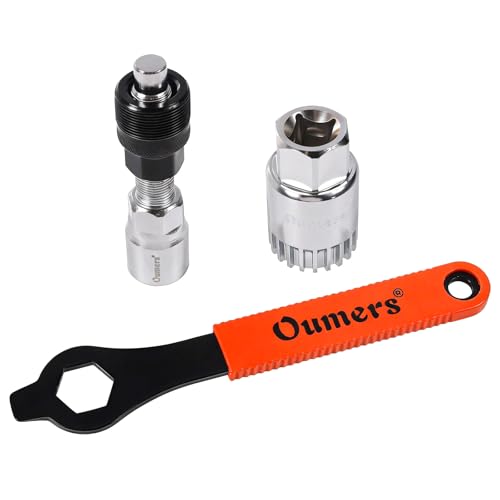
The Oumers Bike Crank Extractor and Bottom Bracket Remover Tool Kit stands out as an essential tool for both amateur and seasoned bike mechanics. This professional kit includes a durable crank extractor and bottom bracket remover, compatible with any brand’s bottom bracket. Made from high-strength steel, it guarantees safe removal without damaging the BB teeth. Weighing just 0.69 pounds, it’s easy to handle. With a solid 4.5-star rating, users appreciate its effectiveness for complicated jobs. For best results, apply high-pressure grease to the threads and verify proper alignment during use. It’s a reliable choice for home mechanics and outdoor biking alike.
Best For: This tool kit is best for both amateur and seasoned bike mechanics looking for a reliable and effective solution for crank and bottom bracket removal.
Pros:
- Durable Construction: Made from high-strength steel, ensuring no damage to BB teeth during use.
- Versatile Compatibility: Fits any brand type bottom bracket and is suitable for various crank set styles.
- User-Friendly: Highly rated for ease of use, making it ideal for complex jobs and home mechanics.
Cons:
- Additional Support Tools Needed: Some users recommend using extra tools for optimal performance.
- Potential for Misalignment: Requires careful alignment during use to prevent damage.
- Limited Durability for Frequent Use: While solid for occasional use, it may not withstand heavy-duty professional use over time.
Oumers Bike Crank Puller Tool Set

For bike mechanics seeking a reliable and effective tool for removing square type crank arms, the Oumers Bike Crank Puller Tool Set stands out as an excellent choice. Crafted from premium forge steel, this set offers durability and ease during repairs. It includes a 16mm Allen Hex Wrench and an adjustable 15mm spanner wrench, making it compatible with any brand’s bottom bracket. Weighing just 0.54 kg, it’s easy to handle. With a 4.4-star rating from users, many appreciate its value, even if some note the pusher tool’s limitations. Overall, it’s a solid addition to your toolkit.
Best For: Bike mechanics and DIY enthusiasts looking for a reliable tool to remove square type crank arms.
Pros:
- Durable construction made from premium forge steel for long-lasting use.
- Lightweight design at 0.54 kg, making it easy to handle during repairs.
- Compatible with any brand bottom bracket, providing versatility for various bike types.
Cons:
- Not compatible with octalink cranksets, limiting its use for some bikes.
- Pusher tool lacks a normal drive for ratchets, which may hinder ease of use.
- Some users reported mixed feedback on value in comparison to other similar tools.
Adjustable Crankshaft Pulley Puller Tool for Auto Repairs
Product not found or API error.
Auto mechanics looking for a reliable and versatile tool will appreciate the Adjustable Crankshaft Pulley Puller Tool. This heavy-duty drive pulley remover makes extraction and installation a breeze for various crankshaft pulleys and flywheels. Its adjustable design accommodates sizes from 6.5 to 1.57 inches, while the anti-slip thread guarantees a tight grip for safe disassembly. With high-torque capability, it tackles stubborn pulleys effortlessly. Made from durable materials, this tool stands up to repeated use in any automotive environment. If you want a dependable addition to your toolkit, this puller tool is an excellent choice.
Best For: Auto mechanics and DIY enthusiasts seeking a reliable tool for extracting and installing crankshaft pulleys and flywheels.
Pros:
- Adjustable design accommodates various sizes of crankshaft pulleys, enhancing versatility.
- High-torque capability allows for easy handling of stubborn or tightly fitted pulleys.
- Durable construction ensures repeated use in automotive or industrial environments.
Cons:
- Limited customer ratings with only 2 reviews, making it difficult to gauge overall satisfaction.
- Best Sellers Rank indicates a relatively low popularity in the automotive tool market.
- Weight of 3.32 pounds may be heavier than some compact alternatives.
Oumers Bike Crank Extractor and Bottom Bracket Remover Tool Kit
Oumers Bike Crank Extractor and Bottom Bracket Remover Tool Kit stands out as a top choice for both home mechanics and outdoor biking enthusiasts. This professional tool kit includes a durable crank extractor and a 16mm spanner, making it compatible with any brand’s bottom bracket. You’ll appreciate its solid construction, designed to handle 20 teeth splined bottom brackets and standard square tapered crank sets without damaging the BB teeth. With an impressive 4.5-star rating from over 7,300 users, it’s proven effective for removing seized crank arms. Just remember to apply grease and verify proper alignment for peak performance.
Best For: Home mechanics and outdoor biking enthusiasts seeking a reliable tool kit for crank arm and bottom bracket removal.
Pros:
- Durable construction made of high-strength steel, ensuring no damage to BB teeth.
- Compatible with various brands of bottom brackets, accommodating both 20 teeth splined and standard square tapered crank sets.
- Highly rated by users, boasting a 4.5-star average from over 7,300 reviews, indicating effectiveness and reliability.
Cons:
- May require additional support tools for optimal performance in some cases.
- Proper alignment and tightening are critical; improper use can lead to damage.
- Limited to specific crank sets, which may not suit all bicycle types.
Crank Puller Bike Tool for Square Taper and Splined Cranks
Product not found or API error.
Mechanics looking for a reliable tool to remove square taper and splined cranks will find the Crank Puller Bike Tool a standout choice. Made from premium carbon steel, it’s built to last without damaging crank threads. Weighing just 3.52 ounces and measuring 3.15 x 0.94 x 0.7 inches, it’s compact for easy storage or on-the-road repairs. The dual-function removable cap accommodates oversized spindles, while the extended jacking rod provides better leverage for effortless crank arm removal. With a 4.6-star rating from users, it’s praised for its strong build and user-friendly operation, making it a must-have in every toolkit.
Best For: Mechanics and cycling enthusiasts seeking a durable and user-friendly tool for removing square taper and splined cranks.
Pros:
- Made from premium carbon steel for enhanced durability and longevity.
- Compact and lightweight design for easy storage and portability during repairs.
- User-friendly features, including a dual-function cap and extended jacking rod for better leverage.
Cons:
- Minor scratches may occur during transit, which could affect appearance.
- Compatibility is limited to square taper and splined cranks, excluding other crank types.
- The warranty period of 90 days may be shorter compared to some competing products.
Park Tool Compact Crank Puller
Product not found or API error.
For those tackling intricate bike repairs, the Park Tool Compact Crank Puller (CWP-7) stands out as an essential tool. This universal crank puller efficiently removes both square taper and splined crank arms, making it a versatile addition to your toolkit. Weighing just 0.25 pounds and made of durable aluminum, it features swappable tips for compatibility with various crank systems. You’ll appreciate its effectiveness in removing tight cranks, backed by a limited lifetime warranty. Just remember to use an adjustable wrench for operation. With a 4.7-star rating, it’s a reliable choice for any bike mechanic.
Best For: The Park Tool Compact Crank Puller is best for bike mechanics and enthusiasts looking for a reliable tool to efficiently remove crank arms from various bicycle crank systems.
Pros:
- Versatile Compatibility: Works with both square taper and splined crank arms, making it suitable for a range of bike models.
- Durable Construction: Made from strong aluminum with a powder-coated finish, ensuring longevity and durability.
- Portable Design: Lightweight and compact, ideal for on-the-road repairs or easy storage in a toolbox.
Cons:
- Requires Additional Tools: Operation necessitates an adjustable wrench, which may not always be readily available.
- Fitting Issues: Some users have reported difficulty when fitting sockets, preferring a wrench for better leverage.
- Potential Tip Loosening: The removable tips may require cautious handling to prevent them from loosening during use.
Factors to Consider When Choosing Crank Extractor Tools
When choosing crank extractor tools, you need to think about compatibility with different crank types, as not all tools fit every bike. Consider the build quality and durability to guarantee your investment lasts through many repairs. Also, look for ease of use, versatility in your toolset, and convenient maintenance and storage options to optimize your workflow.
Compatibility With Crank Types
Understanding the compatibility of crank extractor tools with different crank types is vital for efficient bike maintenance. You’ll need to verify that the tool matches your specific crank design, whether it’s a square taper or a splined crank arm. Some tools cater specifically to 20 teeth splined bottom brackets and standard square tapered crank sets, so make certain to check compatibility before making a purchase. Additionally, tools designed for octalink cranksets may not work with square taper cranks, which highlights the need for careful selection. Verifying the threading specifications of crank arms, like 0.87 x 0.04 inches, is also essential to guarantee proper fit and functionality. This attention to detail will save you time and effort during repairs.
Build Quality and Durability
Choosing the right crank extractor tool hinges on its build quality and durability, as these factors directly impact your maintenance efficiency. Look for tools crafted from premium materials like high-strength steel or carbon steel, which enhance resistance to wear. Tools that undergo a quenching process often boast increased hardness and longevity. Features like anti-slip threads and sturdy construction guarantee a secure grip, minimizing damage risks during use. User-friendly designs, including extended jacking rods or dual-function caps, make crank arm removal easier and more effective. Finally, pay attention to customer feedback regarding build quality and performance. Tools with higher ratings typically indicate a better track record in durability, giving you confidence in your purchase.
Ease of Use
While the right crank extractor tool can make your bike maintenance tasks considerably easier, it’s essential to take into account factors that enhance usability. Look for tools with a dual-function removable cap, which simplifies operations on oversized spindles. Longer jacking rods are another important feature, providing better leverage and making crank removal smoother with less effort. Adjustable designs can accommodate various crank sizes, ensuring compatibility across different bike models. Additionally, choose compact and lightweight tools for easy storage and portability, particularly handy for on-the-road repairs. Finally, user-friendly tools should come with clear instructions and require minimal extra equipment, allowing for a straightforward and efficient crank removal experience.
Tool Set Versatility
When selecting a crank extractor tool, versatility is key since it guarantees you can tackle a variety of crank types and bottom bracket systems with ease. Look for a tool set that accommodates both square taper and splined cranks, ensuring compatibility with different bicycles. A good set should include multiple components, like spanners and wrenches, to handle various removal tasks efficiently. Some extractor sets are designed to fit multiple bottom bracket types, enhancing their usability across brands and models. Adjustable features, such as swappable tips or dual-function designs, can greatly boost versatility. Finally, choose tools that are easy to store and transport, allowing you to perform maintenance on-the-go or in various settings without hassle.
Maintenance and Storage Options
To keep your crank extractor tools in top shape, proper maintenance and storage are essential. After each use, clean your tools to remove dirt and grease, which helps prolong their lifespan. Store them in a dry place using protective cases or pouches to prevent moisture and impact damage. Before putting them away, apply a light coat of oil or grease to the threads to prevent rust and guarantee smooth operation next time. Organize your tools in a toolbox or designated area to make them easily accessible and avoid losing essential components like spanners. Finally, periodically inspect your tools for wear and tear, such as cracks or bends, to confirm safety and effectiveness during future maintenance tasks.