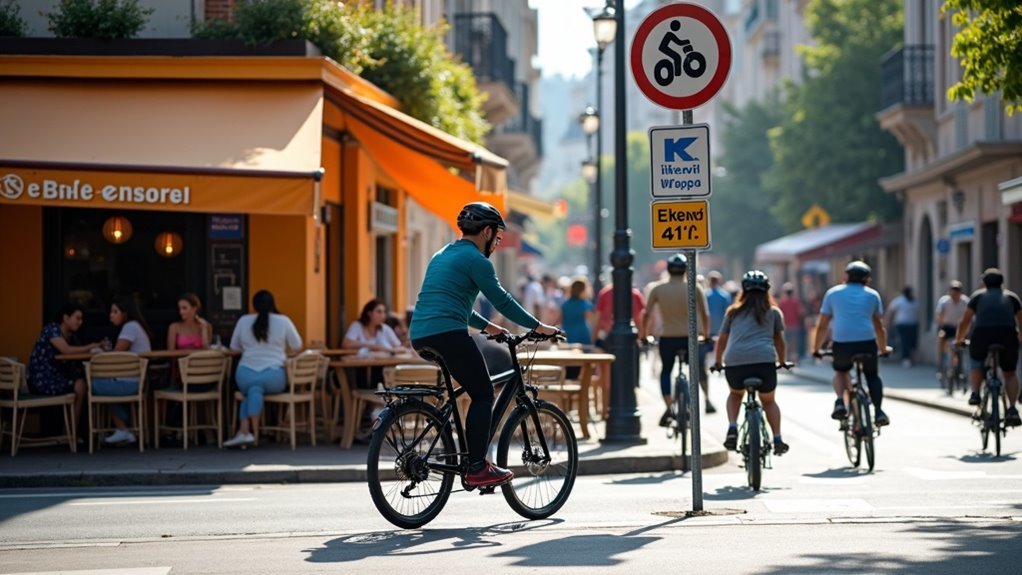
You should reduce tire pressure when riding electric scooters over soft surfaces like sand and snow. Lowering pressure increases the contact patch, enhancing grip and stability. It allows the tires to flex over obstacles, improving overall performance. However, be cautious of over-deflation, as it can compromise control and lead to tire failure. Regularly check tire conditions and adjust based on your specific needs for safety. Understanding these principles will help you optimize your e-scooter’s performance in various conditions.
Key Takeaways
- Reduce tire pressure when riding e-bikes on soft surfaces like sand for improved flotation and traction.
- Lower pressure in snow or icy conditions to enhance grip through a wider contact area on e-bike tires.
- Adjust pressure for rocky terrain to allow e-bike tires to flex and navigate obstacles effectively.
- Consider deflation when facing uneven surfaces to improve stability and control during e-bike rides.
- Monitor tire pressure regularly to avoid over-deflation, which can compromise safety and handling on e-bikes.
When to Reduce Tire Pressure for Better Traction?
When you’re navigating soft surfaces like sand or snow on an electric bicycle (e-bike), reducing tire pressure can significantly improve traction. Lowering tire pressure by 10–15 PSI increases the tire’s contact patch, enhancing grip and stability on uneven terrain.
This flexibility also reduces the risk of punctures, especially on rocky trails. However, it’s crucial to maintain proper tire pressure when riding on snow or ice, as under-inflation can compromise your braking and handling. Choosing the right commuter tires can further enhance your overall riding experience.
Aired-down tires should avoid paved roads to prevent rapid tire wear and overheating. Regular checks based on specific riding conditions are essential for maximizing traction and ensuring safety while riding your e-bike.
How Lower Tire Pressure Improves Traction on Different Surfaces
Lower tire pressure improves traction on various surfaces by increasing the contact patch, allowing tires to adapt to uneven terrain. For optimal grip in challenging conditions, consider reducing pressure by 10-15 PSI. Additionally, choosing the right solid tires can significantly influence your e-scooter’s performance on different surfaces.
| Surface | Benefits of Lower Pressure | Key Considerations |
|---|---|---|
| Sand | Improves flotation, preventing sinking | Enhances maneuverability |
| Snow/Ice | Wider contact area for better grip | Crucial for acceleration and braking |
| Rocky Terrain | Allows tires to flex around obstacles | Reduces puncture risk |
This strategy ensures improved traction, enhancing performance on diverse terrains for e-bikes.
Avoid These Mistakes When Lowering Tire Pressure
While adjusting tire pressure can significantly enhance e-bike performance, several common mistakes can undermine your efforts.
Avoid over-deflation; dropping tire pressure too much can lead to tire bead separation and loss of control. Always inspect for wear and damage, as compromised tires are more susceptible to failure under lower pressures.
Neglecting to reinflate tires after off-road use accelerates wear and increases the risk of blowouts. Monitor tire pressure during deflation to ensure even levels across all tires, preventing handling issues and safety hazards.
Start with conservative pressure settings, adjusting based on performance needs to maintain ideal traction and stability on your e-bike. Additionally, utilizing a scooter steering column lock can help protect your e-bike while you make these adjustments.