Tire width significantly impacts ride comfort on electric bicycles (e-bikes) by influencing shock absorption, grip, and rolling resistance. Wider tires are better at absorbing impacts from rough surfaces, resulting in a smoother ride. However, they may also increase rolling resistance, especially on smoother roads. By adjusting tire pressure, you can optimize comfort based on the terrain you encounter. Ultimately, understanding how tire width affects performance is crucial for enhancing your e-bike experience. Dive deeper to discover the intricacies of tire selection tailored to your riding needs.
Key Takeaways
Effect of Tire Width on E-Bike Comfort
- Wider tires on e-bikes enhance shock absorption due to a larger air volume, effectively minimizing vibrations from uneven surfaces.
- Lower tire pressures in wider e-bike tires boost comfort without compromising speed, leading to an improved overall ride experience.
- Achieving the right balance between tire width and sidewall height is essential for optimal handling and performance in e-bikes.
- Psychological factors can also play a role in comfort; while wider tires may provide a sense of stability, they don’t always guarantee a smoother ride.
- Proper tire selection and pressure adjustments tailored to the terrain can significantly improve riding comfort and performance for e-bike users.
Understanding Tire Width and Its Measurement
When considering tire width for e-bikes, it’s essential to understand how it’s measured and its impact on your ride. Tire width is gauged from sidewall to sidewall, typically in millimeters. This measurement significantly affects ride quality and comfort.
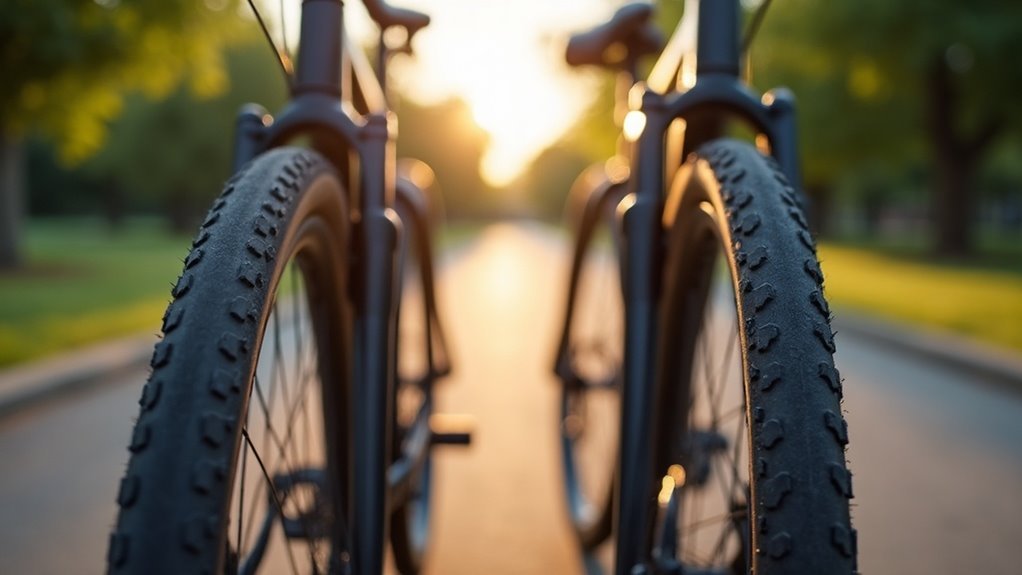
Wider tires create a larger contact patch, enhancing grip and shock absorption, which results in smoother rides over various terrains. For instance, city e-bikes often feature tires around 28–40mm for optimal balance between speed and stability, while off-road e-bikes may use wider tires for increased traction and control.
Choosing the right tire width involves evaluating the intended terrain to optimize performance and comfort effectively. Additionally, selecting the appropriate tire width can greatly influence the overall ride experience, especially when considering different bike setups.
How Tire Width Affects Ride Comfort and Performance
Tire width significantly influences ride comfort and performance, particularly for electric bicycles (e-bikes) traversing various terrains.
Wider tires generally enhance ride comfort by increasing air volume, which improves shock absorption on rough surfaces. The larger contact patch of wider tires boosts stability, reducing rider fatigue during extended rides.
Wider tires improve ride comfort and stability, enhancing shock absorption and reducing rider fatigue on rough terrains.
While narrower tires can decrease rolling resistance, they often transmit more vibrations, resulting in a harsher experience. Additionally, wider tires allow for greater sidewall flex, enabling lower pressures that enhance comfort without sacrificing speed. Choosing the right honeycomb scooter tires can also impact how these characteristics play out on different surfaces.
Striking the right balance between tire width and height is essential for optimal comfort and performance on e-bikes.
The Impact of Tire Width on Grip and Traction
While it may not be immediately apparent, the width of your e-bike tires significantly influences grip and traction. Wider tires increase the contact patch, enhancing performance on various surfaces.
Key benefits include:
- Improved grip on loose terrains like gravel and mud.
- Lower air pressure allows for better shock absorption, enhancing traction.
- Enhanced cornering stability, crucial during sharp turns.
Although wider tires may slightly increase rolling resistance on smooth pavement, their advantages in wet conditions—such as reducing hydroplaning—make them a compelling choice for maximizing grip and traction. Investing in the best bike fenders can also complement wider tires, improving overall ride comfort.
Opt for wider tires for superior control on your e-bike.
How Tire Width Influences Rolling Resistance and Efficiency
Tire width significantly impacts your e-bike’s speed and efficiency by influencing the dynamics of the contact patch. Wider tires may increase rolling resistance, but adjusting tire pressure can help mitigate this effect, allowing you to strike a balance between comfort and performance. Understanding these factors enables you to make informed choices about tire selection, ultimately enhancing your overall e-bike riding experience. Choosing the right commuter tires can further optimize your ride for daily use.
Tire Width and Speed
When considering how tire width affects speed on e-bikes, it’s essential to understand the relationship between rolling resistance and the contact patch. Narrow tires can reduce rolling resistance, allowing for faster speeds on smooth surfaces. In contrast, wider tires increase traction, which is beneficial for stability but may lead to higher rolling resistance, resulting in slower speeds on paved roads.
Key factors to consider include:
- Tire width: Narrower tires enhance speed, while wider tires provide additional comfort.
- Tire pressure: Lower pressures in wider tires can improve comfort with minimal impact on speed.
- Tread design: Affects rolling resistance and overall efficiency.
Additionally, choosing the right solid tires can further enhance riding comfort and performance.
Selecting the appropriate tire width and pressure can significantly enhance your e-bike riding experience.
Contact Patch Dynamics
Understanding how tire width affects rolling resistance and efficiency is essential for optimizing your e-bike’s performance. A wider tire increases the contact patch, enhancing traction and comfort, especially on uneven surfaces.
However, this larger contact area can lead to higher rolling resistance due to increased friction. Conversely, narrower tires offer reduced rolling resistance, allowing for faster speeds on smooth terrain but may compromise grip in loose conditions.
Balancing tire width is vital, as it directly influences handling and overall efficiency. Selecting the right width can enhance your e-bike’s performance while maintaining comfort, making your ride more enjoyable and efficient.
Pressure Adjustments Impact
While you mightn’t realize it, adjusting tire pressure in relation to width can greatly affect rolling resistance and efficiency in e-bikes.
Wider tires, when paired with ideal pressure adjustments, enhance ride comfort and battery performance.
Key benefits include:
- Larger contact patches reducing rolling resistance at lower pressures
- Improved shock absorption for smoother rides on uneven terrain
- Better weight distribution that minimizes drag and optimizes energy use
The Role of Tire Width in Shock Absorption and Comfort
Tire width plays a crucial role in shock absorption and overall comfort for e-bikes. Wider tires typically have a larger air volume, enhancing their ability to cushion impacts from uneven surfaces.
The expanded contact patch of wider tires helps distribute road irregularities, minimizing vibrations experienced by the rider. Lower tire pressure can further improve comfort, allowing for more flex and enhanced shock absorption.
However, the relationship between tire width and sidewall height is important; wider tires often have shorter sidewalls, which can improve handling but may compromise cushioning.
Finding the right balance is essential for optimizing ride quality without sacrificing comfort on your e-bike.
Selecting the Ideal Tire Width for Various Bike Types and Conditions
Selecting the right tire width can greatly enhance your riding experience on electric bicycles (e-bikes), particularly when considering the specific type of e-bike and the conditions you’ll encounter.
- Road E-Bikes: Narrow tires (23–28mm) prioritize speed, sacrificing some comfort for performance. They are ideal for commuting or road cycling.
- Hybrid E-Bikes: Medium tires (28–42mm) strike a balance, offering traction and comfort across varied terrains. This makes them versatile for urban and light off-road rides.
- Mountain E-Bikes: Wider tires (2.0–2.6 inches) excel at stability and shock absorption. They enhance comfort on rough trails and provide better grip on uneven surfaces.
Debunking Common Misconceptions About Tire Width and Comfort
Many e-bike riders mistakenly believe that narrower tires always provide a more comfortable ride.
In reality, wider tires can enhance comfort by better absorbing road shocks and improving stability.
Understanding the balance between comfort, performance, and tire pressure is essential for making informed choices about tire width on your e-bike.
Tire Width Myths Explained
How do wider tires impact your e-bike ride comfort? While it’s a common misconception that wider tires always enhance comfort, the reality is more nuanced. Here are key points to consider:
- Wider tires can absorb impacts better but may transmit more road noise.
- Narrower tires aren’t always faster; performance depends on surface conditions.
- Larger contact patches improve comfort but increase rolling resistance, which can affect battery efficiency.
Ultimately, tire width affects ride quality variably on e-bikes. Your choice should align with personal preferences, riding style, and terrain to achieve optimal comfort, rather than blindly adhering to myths about wider tires.
Comfort vs. Performance Balance
While it’s tempting to believe that wider tires always enhance comfort in e-bikes, the balance between comfort and performance is far more complex.
Wider tires can improve ride quality by providing more air volume, which helps absorb road shocks better. However, they may also increase road noise and reduce maneuverability.
Low-profile tires, while offering sharper handling, often sacrifice cushioning, leading to a stiffer ride. Tire construction, particularly TPI (threads per inch), plays a significant role in comfort as well; higher TPI tires can absorb shocks more effectively.
Additionally, psychological factors can influence your perception—wider tires may feel more stable, but they don’t always guarantee superior comfort during daily rides on an e-bike.
Impact of Tire Pressure
Although tire width is often touted as the primary factor influencing comfort in electric bicycles (e-bikes), tire pressure plays an equally critical role that’s frequently overlooked.
The balance between tire width and pressure can greatly affect ride comfort. Consider these factors:
- Lower pressures in wider tires enhance shock absorption, smoothing out rough surfaces.
- Properly inflated wider tires reduce rolling resistance, improving performance without sacrificing comfort.
- Over-inflation stiffens sidewalls, leading to a harsher ride.
Adjusting tire pressure based on conditions can optimize comfort. For rough terrains, lower pressures work best, while smoother surfaces benefit from higher pressures, ensuring you maximize both comfort and performance on your e-bike.