

If you’re looking for the best torque sensors of 2025 that offer precision and reliability, check out options like the Steering Torque Sensor for the 2008-2012 Ford Escape and Mercury Mariner, or the ATO Dynamic Torque Sensor (600Nm) for industrial applications. Each sensor boasts accuracy and durable construction, ensuring long-lasting performance. You’ll find various models suited for different needs, making it easier to enhance your vehicle’s performance and reliability. There’s more to explore on this topic!
Steering Torque Sensor for 2008-2012 Escape and Mercury Mariner
Product not found or API error.
If you own a 2008-2012 Ford Escape or Mercury Mariner, the Steering Torque Sensor is the ideal choice for you. This replacement part, with numbers CL8Z-3F818-A, CL8Z3F818A, and CL8Z 3F818 A, guarantees precise steering performance. Designed specifically for your model, it comes with a steering angle sensor and an alignment tool for easy installation. Each sensor is 100% brand new, rigorously tested, and meets OEM specifications, backed by a lifetime warranty. Plus, you’ll enjoy significant cost savings compared to dealer prices, guaranteeing quality without breaking the bank. Reach out for responsive customer support whenever needed.
Best For: Owners of 2008-2012 Ford Escape and Mercury Mariner looking for a reliable replacement steering torque sensor.
Pros:
- 100% brand new and rigorously tested to ensure quality and performance.
- Comes with essential installation tools, including a steering angle sensor and alignment tool.
- Lifetime warranty provides peace of mind against product failures or defects.
Cons:
- Compatibility is limited to specific models (2008-2012 Ford Escape and Mercury Mariner).
- Requires checking part numbers for proper fit, which may be inconvenient for some customers.
- Customer support response may be delayed on Sundays and public holidays.
ATO 2Nm Static Torque Sensor
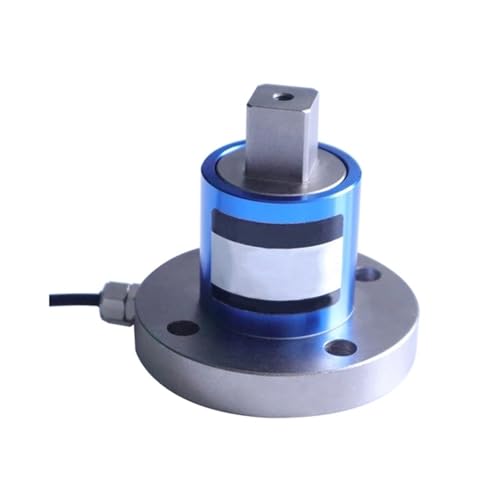
The ATO 2Nm Static Torque Sensor stands out as an excellent choice for engineers and technicians who require precise torque measurements in various applications. With a measurement range of up to 200 Nm and an impressive accuracy of ±0.2%, this alloy steel sensor is built for reliability. It features a flange mount design and outputs an electrical signal of 0-20mV. You’ll appreciate its robust safety overload capacity of 120% F.S. and IP65 protection class. Ideal for testing motors and torque wrenches, it’s lightweight and easy to install. Plus, it boasts a solid 5.0 customer rating.
Best For: Engineers and technicians needing precise torque measurements for AC/DC motors, servo motors, and torque wrenches.
Pros:
- High accuracy of ±0.2% ensures reliable measurements.
- Robust design with alloy steel material and IP65 protection class for durability.
- Lightweight and easy to install with a flange mount design.
Cons:
- Limited measurement range options may not suit all applications.
- Electrical output signal of 0-20mV may require compatible equipment for reading.
- Only suitable for static torque measurements, not dynamic applications.
ATO Micro Rotary Torque Sensor for Dynamic Torque Measurement (5 Nm, 0.5% FS Accuracy)
Product not found or API error.
Engineers and technicians seeking reliable and precise torque measurement will find the ATO Micro Rotary Torque Sensor an excellent choice for dynamic applications. With a capacity of 5 Nm and an impressive accuracy of 0.5% FS, this stainless steel sensor is built to endure. It features a flange mount design and an IP65 protection class, ensuring durability in various environments. You can easily measure both forward and reverse torque, making it suitable for AC/DC motors and gear motors. Plus, the sensor outputs a convenient 0-20 mV signal, streamlining data integration into your systems.
Best For: Engineers and technicians looking for a precise and durable solution for dynamic torque measurement in various applications.
Pros:
- High accuracy of 0.5% FS ensures reliable measurements.
- Robust stainless steel construction with IP65 rating for durability in challenging environments.
- Capable of measuring both forward and reverse torque, suitable for a variety of motor applications.
Cons:
- Limited to a maximum capacity of 5 Nm, which may not be sufficient for high-torque applications.
- Output signal of 0-20 mV may require additional signal conditioning for some systems.
- The flange mount design may not be compatible with all setups, requiring specific installation considerations.
ATO Dynamic Torque Sensor (600Nm)
Product not found or API error.
For professionals seeking precise motor speed measurement, the ATO Dynamic Torque Sensor (600Nm) stands out as an exceptional choice. This robust torque transducer covers a capacity range from 0.1 Nm to 10,000 Nm, ensuring versatility in various applications. With an impressive non-linearity measurement accuracy of 0.1%FS, you can trust its reliability. The sensor features a user-friendly LCD display for real-time monitoring and outputs a standard 0-10V signal compatible with PLC and DCS systems. Made from durable 17-4 stainless steel and rated IP43, it’s designed to withstand environmental challenges, making it a smart investment for your projects.
Best For: Professionals seeking precise and reliable motor speed measurement in various industrial applications.
Pros:
- Accurate measurement with a non-linearity of 0.1%FS, ensuring reliable data.
- Durable construction using 17-4 stainless steel, providing resistance against environmental elements.
- User-friendly LCD display for real-time monitoring of torque, speed, and power values.
Cons:
- Limited to a maximum torque capacity of 10,000 Nm, which may not be sufficient for all applications.
- IP43 rating may not provide adequate protection in highly demanding or wet environments.
- Best Sellers Rank indicates it may not be as widely recognized compared to competitors in the market.
CL8Z-3F818-A Power Steering Torque Sensor (Compatible for Escape and Mercury Mariner 2008-2012)

If you’re looking to enhance the steering performance of your 2008-2012 Escape or Mercury Mariner, the CL8Z-3F818-A Power Steering Torque Sensor is an excellent choice. This sensor accurately measures the torque between your steering wheel and the output shaft, converting it into a voltage signal for the ECU. This guarantees stable steering control, improving both safety and your overall driving experience. It’s designed for easy installation, needing no complex tools or technical skills. Made from high-quality materials, it offers strong corrosion resistance and durability, maintaining peak performance on various road conditions. Upgrade your vehicle’s steering today!
Best For: Drivers of 2008-2012 Ford Escape and Mercury Mariner models looking to enhance their steering performance and safety.
Pros:
- Easy installation with included alignment tools, requiring no complex skills.
- High-quality materials ensure durability and strong corrosion resistance.
- Accurately measures torque for stable steering control, improving overall driving experience.
Cons:
- Compatibility limited to specific models (2008-2012 Escape and Mercury Mariner).
- May require professional installation if users are unsure about the process.
- Replacement may not be necessary for all vehicles, leading to potential unnecessary costs.
Power Steering Torque Sensor Compatible with Ford Escape and Mercury Mariner
Product not found or API error.
The Power Steering Torque Sensor, designed specifically for 2008-2012 Ford Escape and 2008-2011 Mercury Mariner models, stands out as a top choice for drivers seeking enhanced vehicle stability and control. This high-precision sensor accurately detects steering angles, improving your driving experience. It’s compatible with all models of the specified vehicles and replaces part numbers CL8Z-3F818-A, CL8Z3F818A, and CL8Z 3F818 A. Crafted from high-quality materials, it guarantees reliability and safety while maintaining precise steering wheel alignment. With a lightweight design and excellent performance, this sensor is a must-have for your vehicle’s steering system.
Best For: Drivers of 2008-2012 Ford Escape and 2008-2011 Mercury Mariner models looking for improved steering control and vehicle stability.
Pros:
- High-precision sensor technology enhances driving experience by accurately detecting steering angles.
- Durable construction ensures reliability and safety, contributing to long-term vehicle performance.
- Easy compatibility with all models of the specified vehicles and replaces multiple part numbers.
Cons:
- Limited to specific vehicle models, which may not suit drivers of other brands or models.
- Requires installation expertise, which may necessitate professional assistance for some users.
- Potential for increased costs if additional repairs or installations are needed alongside the sensor replacement.
CL8Z3F818A Steering Torque Sensor for Ford Escape & Mercury Mariner

Drivers of the Ford Escape and Mercury Mariner models from 2008 to 2012 will find the CL8Z3F818A Steering Torque Sensor an ideal choice for enhancing their vehicle’s performance. This sensor accurately measures the torque between your steering wheel and output shaft, converting it into a voltage signal for the ECU. Built from wear-resistant materials, it offers stable performance and exceptional corrosion resistance, ensuring durability on various road conditions. Installation is straightforward, thanks to the included alignment tool. Enjoy improved steering force control and a better driving experience, backed by positive customer feedback on its functionality and reliability.
Best For: Drivers of the 2008-2012 Ford Escape and Mercury Mariner looking to enhance steering performance and reliability.
Pros:
- Durable and wear-resistant material ensures long-lasting performance.
- Straightforward installation process with included alignment tool.
- Accurately measures torque for improved steering control and driving experience.
Cons:
- Some instances of incorrect replacement reported by customers.
- Occasional defective products noted in customer feedback.
- Limited compatibility with other vehicle models outside the specified range.
Factors to Consider When Choosing Torque Sensors
When choosing torque sensors, you need to take into account several key factors to guarantee they meet your needs. Think about measurement accuracy, output signal type, and load capacity, as these will impact performance. Additionally, don’t forget to check environmental protection ratings and installation compatibility for a seamless integration.
Measurement Accuracy Requirements
Choosing the right torque sensor hinges heavily on measurement accuracy, as it directly affects the reliability of your torque readings. High-quality sensors typically achieve accuracy levels between ±0.1% to ±0.5% full scale (FS), vital for applications requiring precise torque control, like motor testing. When selecting a sensor, consider factors such as design, materials, and calibration processes, as these influence measurement accuracy. Additionally, assess the sensor’s measurement range; accuracy can vary across different points, with ideal performance usually found at mid-range values. Regular calibration and maintenance are necessary to maintain accuracy over time, especially in high-usage environments where wear and environmental factors may impact sensor performance. Prioritizing accuracy guarantees you get trustworthy torque measurements.
Output Signal Type
Selecting the right output signal type for your torque sensor is essential, as it directly impacts how effectively the sensor integrates with your measurement system. You’ll find common options like analog and digital signals, each offering unique benefits. Analog sensors provide continuous voltage outputs that change proportionally with torque, making them great for real-time monitoring and easy interfacing with analog devices. On the other hand, digital output signals, often using protocols like RS-232 or CAN bus, allow for more complex data transmission and can deliver higher precision measurements over longer distances without signal loss. Your choice will affect the sensor’s measurement range and accuracy, so consider your application carefully—whether it’s static or dynamic torque measurements.
Load Capacity Considerations
Understanding load capacity is crucial for guaranteeing your torque sensor meets the demands of your specific application. You’ll find torque sensors range from 2 Nm for light tasks to 10,000 Nm for heavy-duty needs. It’s essential to choose a sensor that can handle the maximum expected torque, as exceeding this can lead to measurement errors or damage. Remember to take into account dynamic load capacity, especially in applications with fluctuating torque, as static ratings might not suffice. Many sensors feature safety overload capacities, typically around 120% of their rated load, providing extra protection against sudden spikes. Ultimately, verify the sensor’s load capacity aligns with your application’s torque fluctuation, duration, and other specific requirements for peak performance.
Environmental Protection Ratings
When it comes to torque sensors, environmental protection ratings play a vital role in ensuring reliable performance. These ratings, like IP ratings, indicate how well a sensor resists dust and moisture. For instance, an IP65 rating means the sensor is dust-tight and can handle water jets, making it ideal for harsh conditions. If your application faces extreme temperatures, it’s important to choose sensors with appropriate upper temperature ratings to maintain accuracy and longevity. Generally, sensors with higher environmental protection ratings enjoy a longer service life, reducing your replacement and maintenance costs. So, understanding the specific environmental conditions your torque sensor will encounter is key to selecting a product that meets necessary durability and reliability standards.
Installation and Compatibility
Choosing the right torque sensor hinges not just on environmental protection ratings but also on installation and compatibility with your vehicle or equipment. Make certain the sensor matches the specific make and model of your setup to guarantee a proper fit and functionality. Check the OE part numbers to confirm compatibility and avoid incorrect replacements. Consider the installation process; some sensors come with alignment tools that make replacement easier, reducing the need for specialized skills. Evaluate how complex the installation is; sensors designed for straightforward replacement can save you time and effort. Finally, verify the temperature ratings and protection classes to ensure the sensor operates effectively under your application’s environmental conditions.